Intro: Zerion Rebrand
I led Zerion's first full rebrand, working with our internal team and Shuka Brand Bureau.
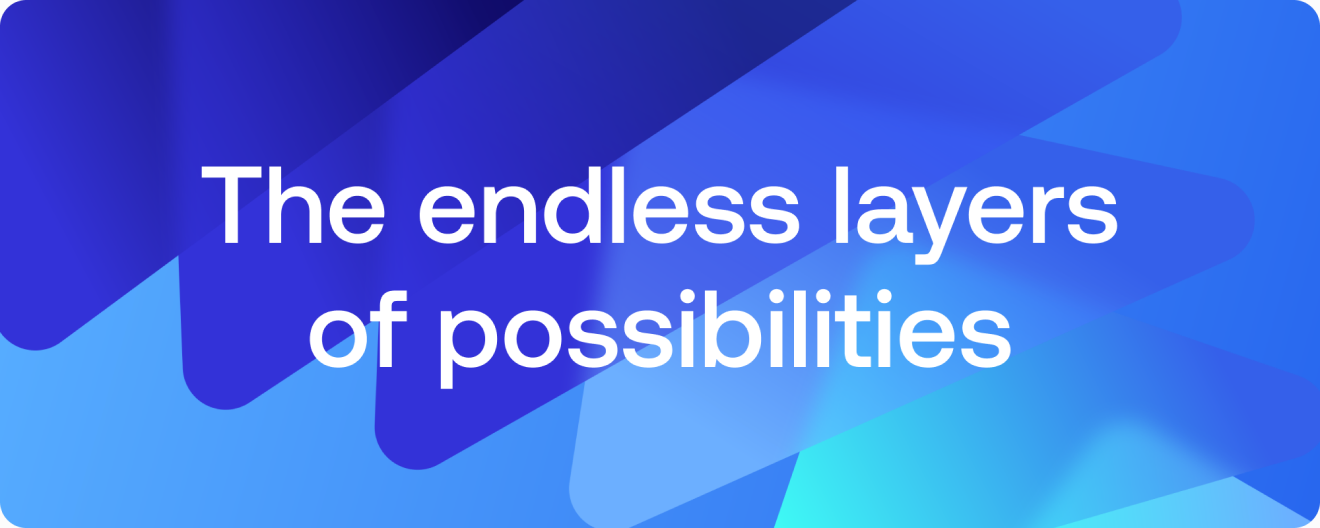
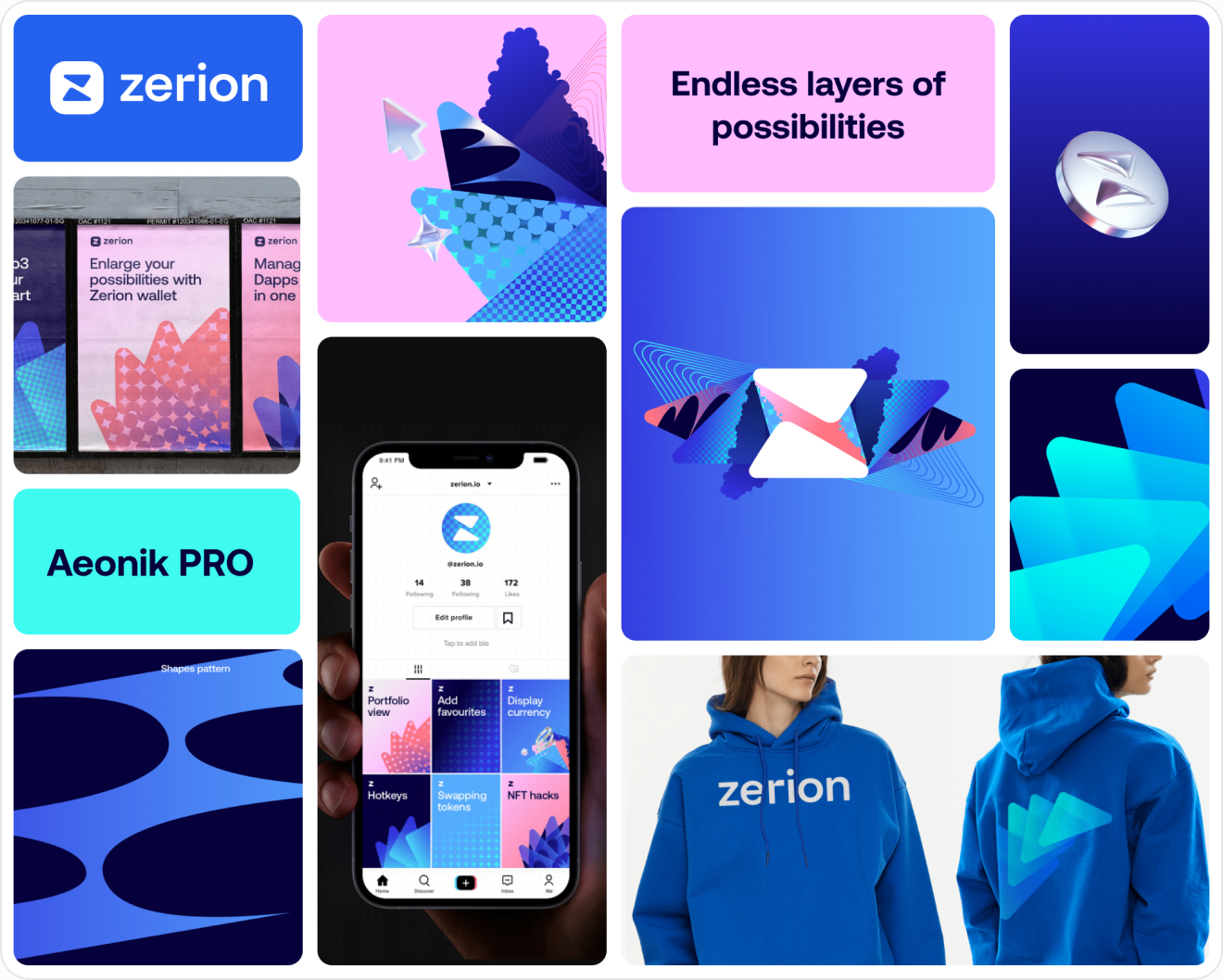
We turned a clean but fragmented visual language into a complete brand system for product, marketing, motion, social, presentations, and campaigns. The final direction, “Endless layers of possibilities,” made Zerion more recognizable while keeping it functional and user-focused.
Problem
By 2021, Zerion had been growing for over 3 years. The product was maturing, the company was scaling, and external communication was increasing fast.
We had a strong product culture built around progressive disclosure: make the product feel simple at first, but reveal more depth when users need it. For someone with a few assets and wallets, Zerion should feel clear and easy to understand. For advanced users with many positions, networks, and transactions, it still had to provide enough power and detail.
This principle shaped the product, but the brand did not express it yet. The product was clean and disciplined, but the broader visual language felt sterile and inconsistent. Product and marketing needed a shared foundation that could reflect both simplicity and depth.
Role
I led Zerion's full rebrand end to end.
My work included selecting the external partner, driving the process with Shuka Brand Bureau, connecting product and marketing needs into one brief, running feedback across the company, and helping shape the final direction.
The strategy and craft were a shared effort with the bureau and the internal team. My responsibility was to keep the brand true to the product and make sure the system could work across real company needs.
Approach
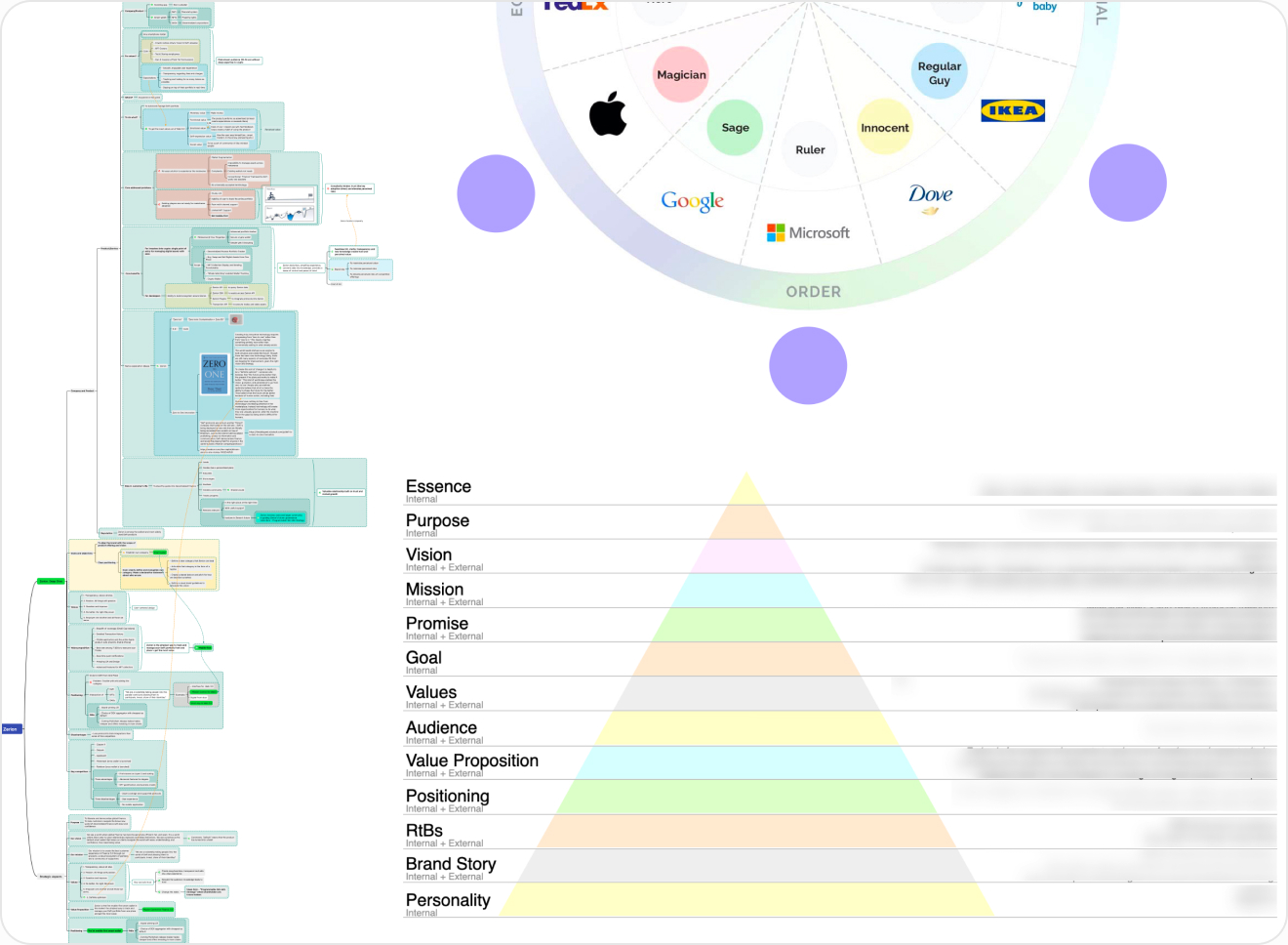
We started with the foundation: positioning, audience, product principles, mind maps, and brand archetypes.
Together with Shuka Brand Bureau, we defined the Magician as the core product archetype: making complex blockchain activity feel understandable and useful. For marketing, we added the Jester as a secondary register to keep communication playful, sharp, and culturally alive.
That split became an important strategic decision. The product had to feel trustworthy and clear, while marketing had room to be more expressive and memorable. One brand, two registers.
Exploration
From the strategy, we moved into metaphors and design territories.
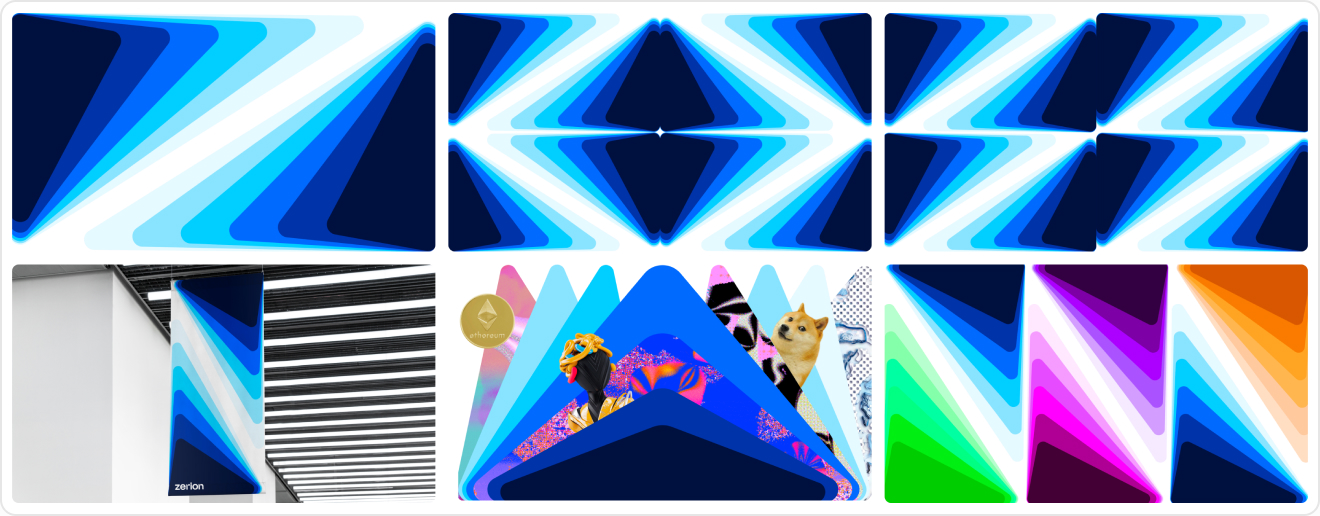
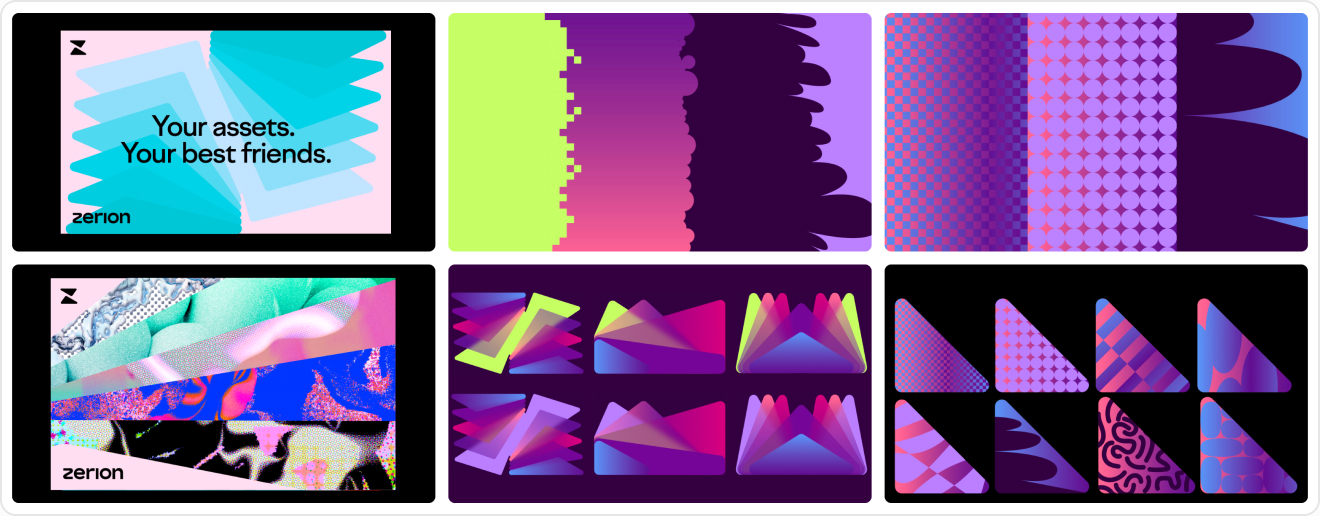
We explored several directions and focused on a territory connected to the many layers Zerion opens for users: assets, networks, actions, identities, and opportunities. From there, we refined the visual language through color, shape, motion, and system rules until it felt both distinctive and usable across product and marketing.
This became the final direction: Endless layers of possibilities.
Solution
The final system paired a clean product foundation with a more expressive communication layer.
It covered identifiers, color, typography, illustration, motion, social, presentations, offline materials, and swag.
The result was one flexible language: dynamic and recognizable where it needed to be, disciplined and clear where users actually lived.
Impact
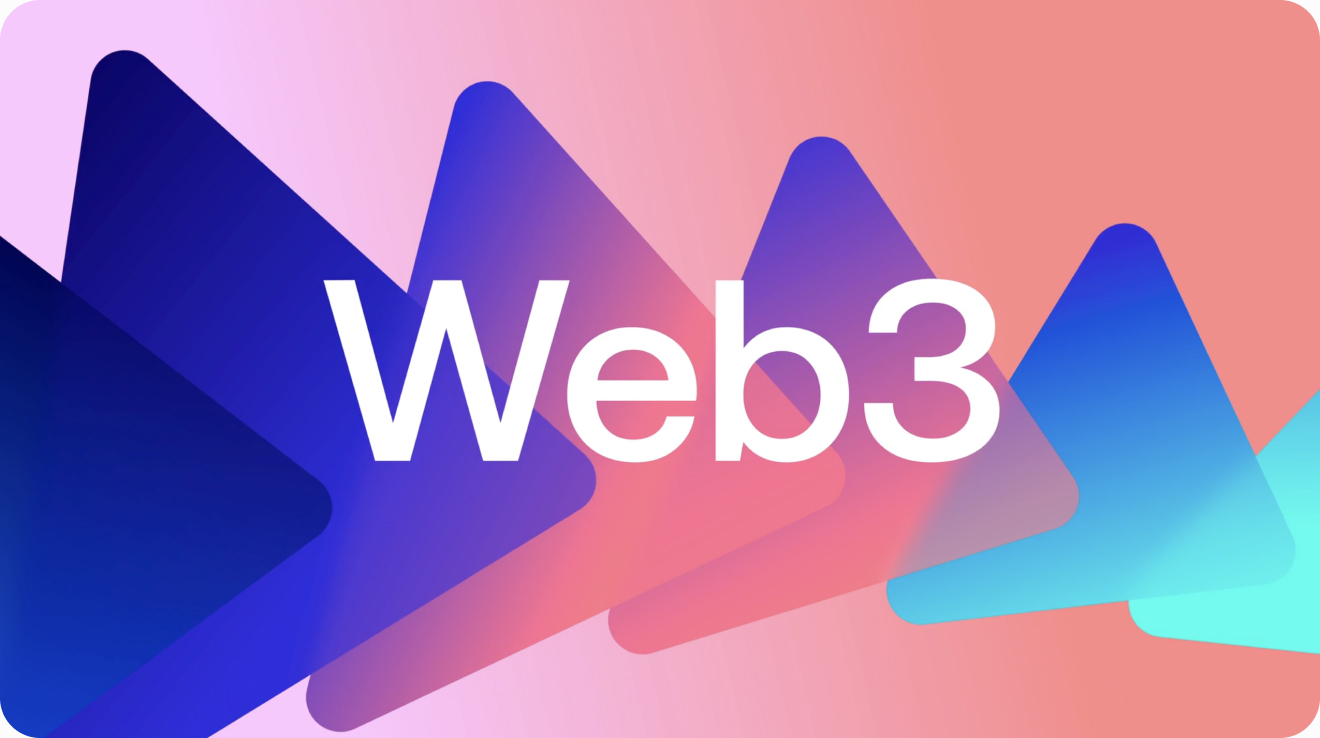
The rebrand gave Zerion a shared visual and strategic foundation across product, marketing, and company communication.
It turned brand decisions from one-off choices into a system the team could use repeatedly: for product surfaces, campaigns, social, presentations, motion, and future launches.
The biggest change was alignment. Product and marketing could now build from the same principles: simple on the surface, deeper when needed, expressive without becoming noisy, and always connected to the product experience.
That became the real value of the project: not just a new visual style, but a foundation the team could keep building on.