Pavel Brek
I'm a lead designer and design manager with 13 years of experience in product and interface design, including 8 years at Zerion.
I joined Zerion as the founding designer and later built the design team, shaping the product, brand, user experience, and design system from the ground up. This work was recognized with the UX Award at DevCon Osaka '19 and Best UI by CityAM '20.
I use design to explore new domains. This led to Zerion DNA, a project I designed that became one of the largest NFT collections on Ethereum, with 350K+ holders.
- Zerion·Lead Designer & Head of Design·2018-2026
- Intellectsoft·Senior UI/UX Designer·2017-2019
- Born In Idea·UI/UX Designer·2015-2017
- Studio Libre·Graphic and Web designer·2013-2015

I joined Zerion in 2018 as the founding designer, leading design across product, brand, and marketing in the early years. For the first 4 years, I worked as the only designer, shaping the product from the ground up.
As the company grew, I built and led the design team, keeping quality and consistency across the product while staying hands-on with key product surfaces and launches.
600,000+
monthly active users
$2B+
cumulative trading volume
63%
week-1 retention
70
NPS
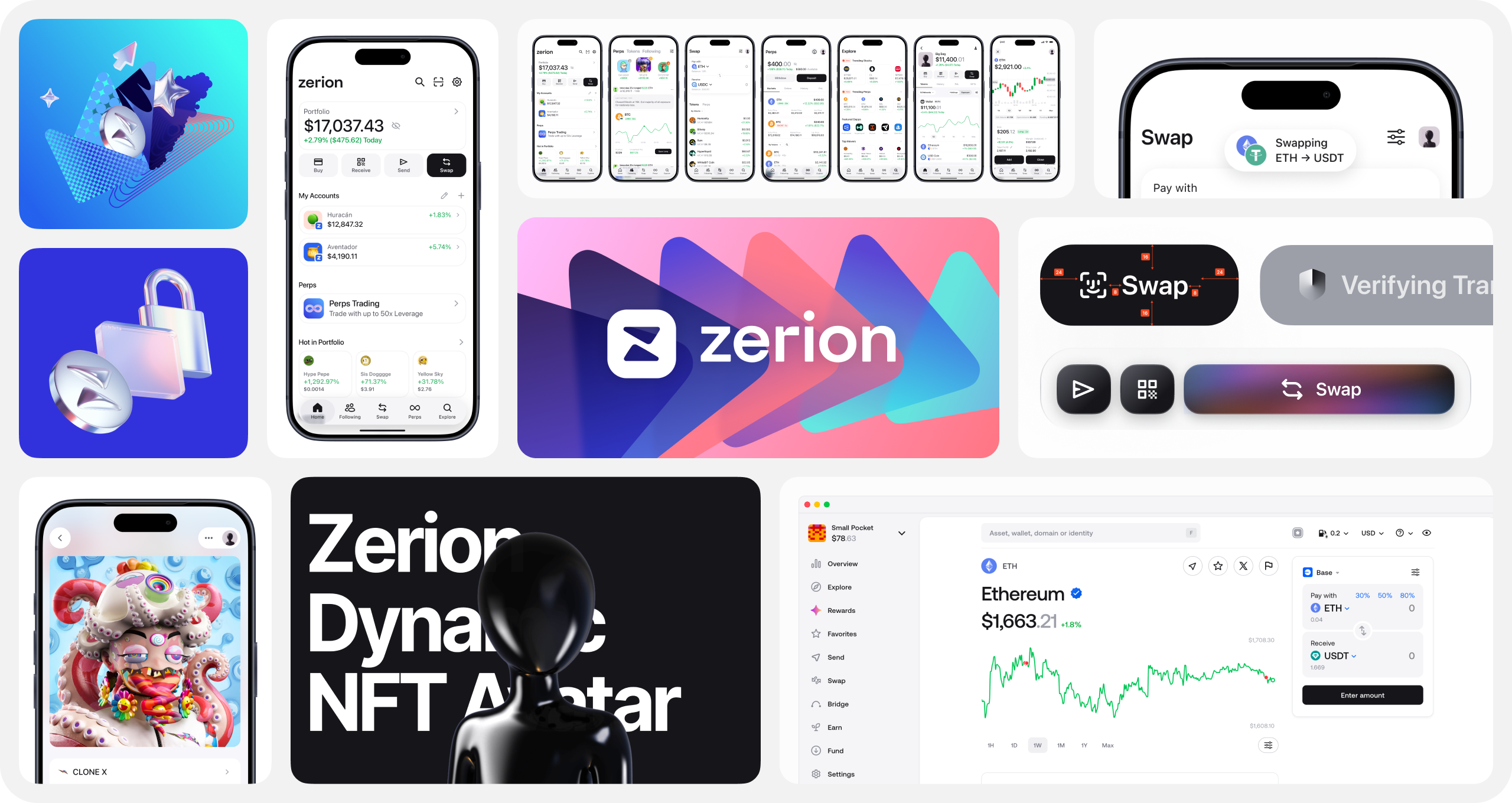
Mobile app
Core mobile experience
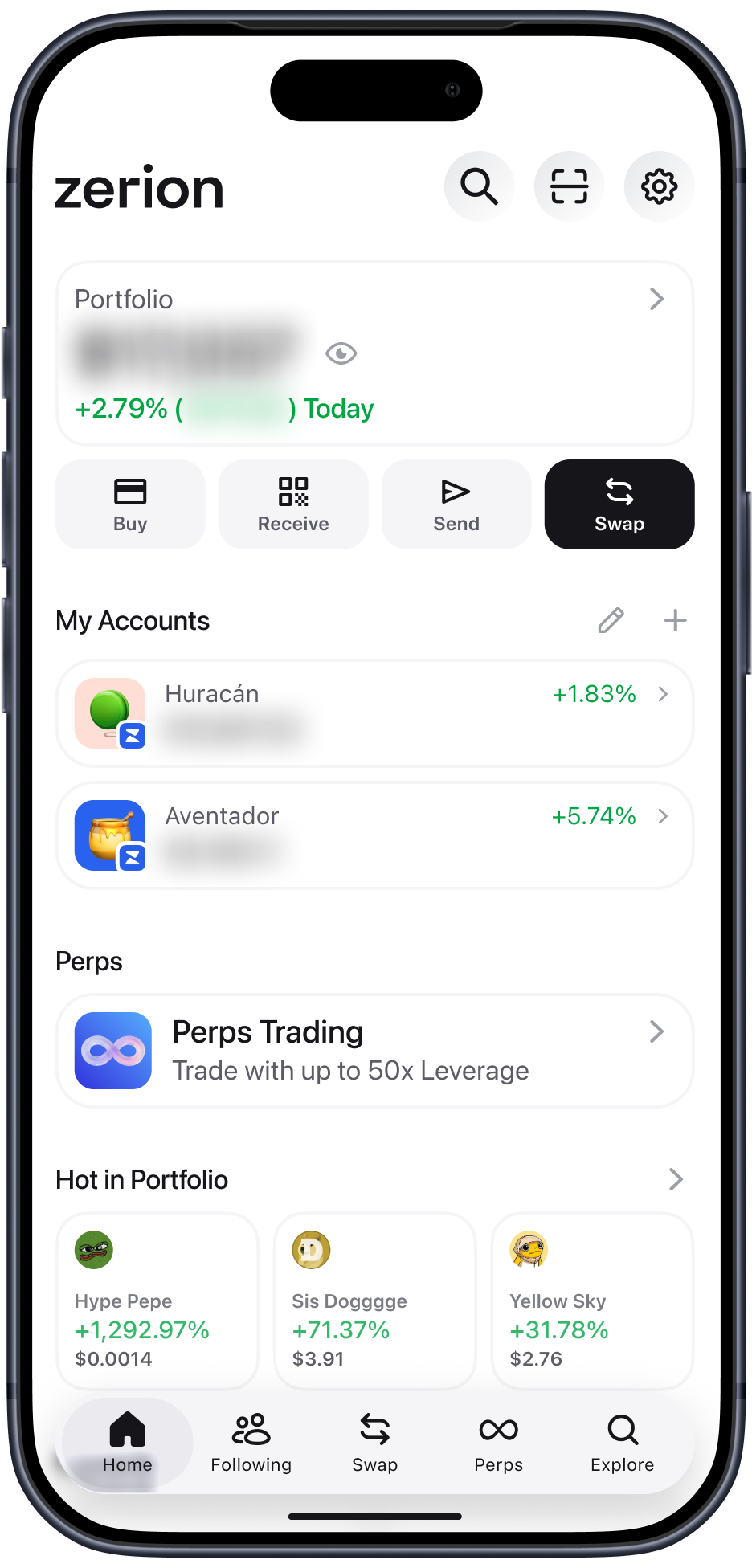
A major design challenge at Zerion was making the wallet feel like more than a place to check balances.
The mobile app had to support several modes of use: portfolio tracking, social discovery, trading, and exploration. We worked to make these flows feel connected and consistent, so Zerion felt like one coherent product instead of a set of separate features.
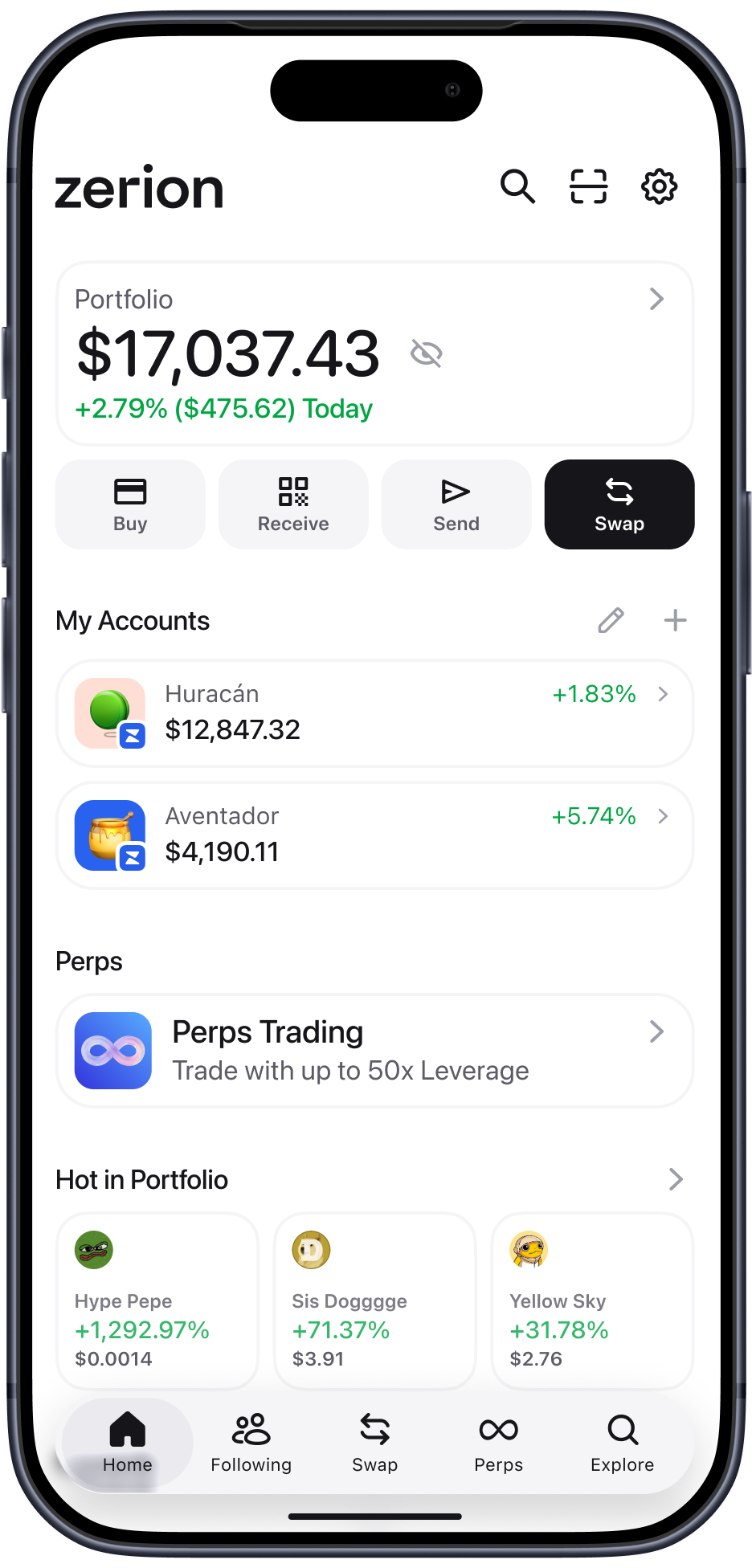
Home
A clear portfolio overview across wallets, networks, tokens, NFTs, and DeFi positions.
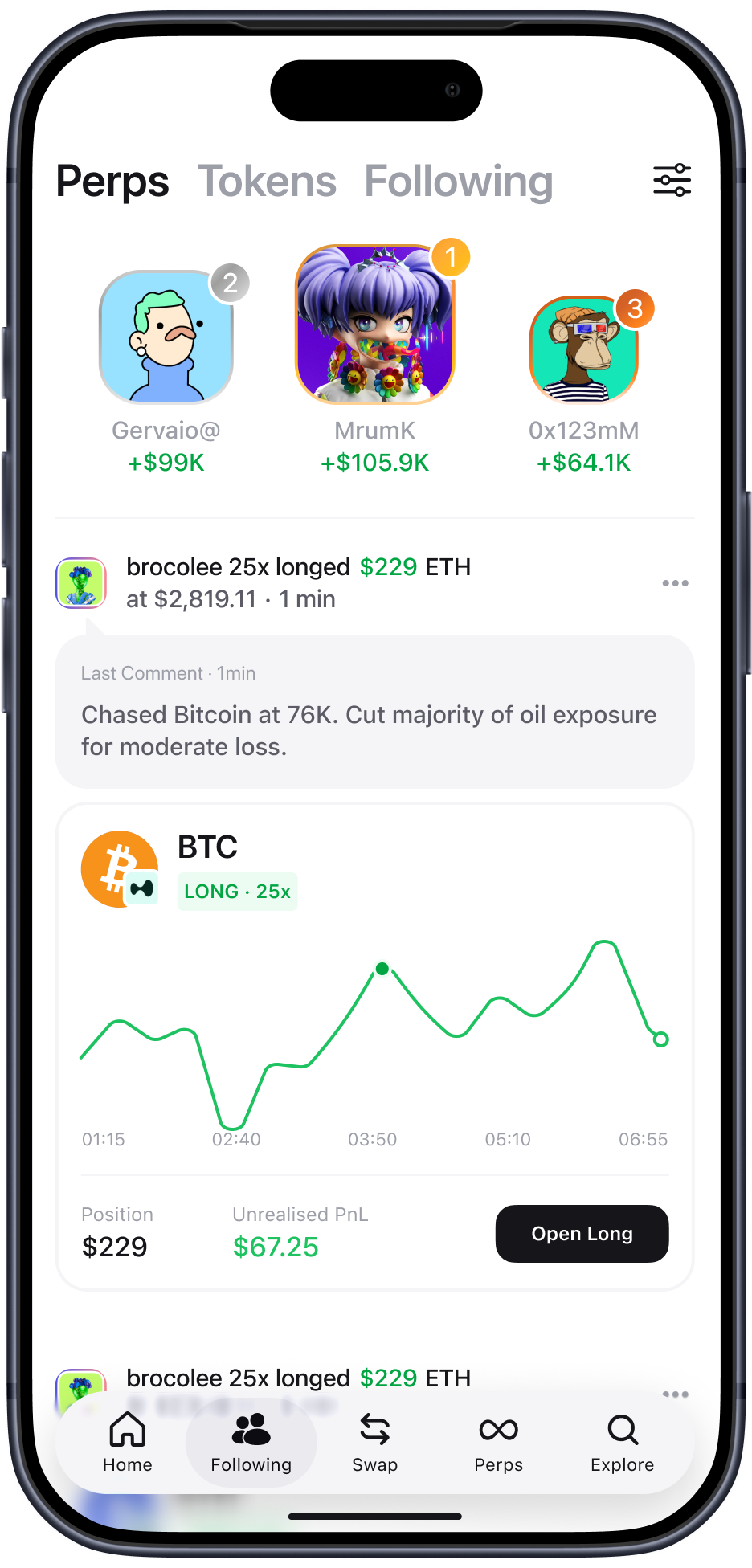
Following
Social discovery based on real on-chain activity, wallets, trades, and market signals.
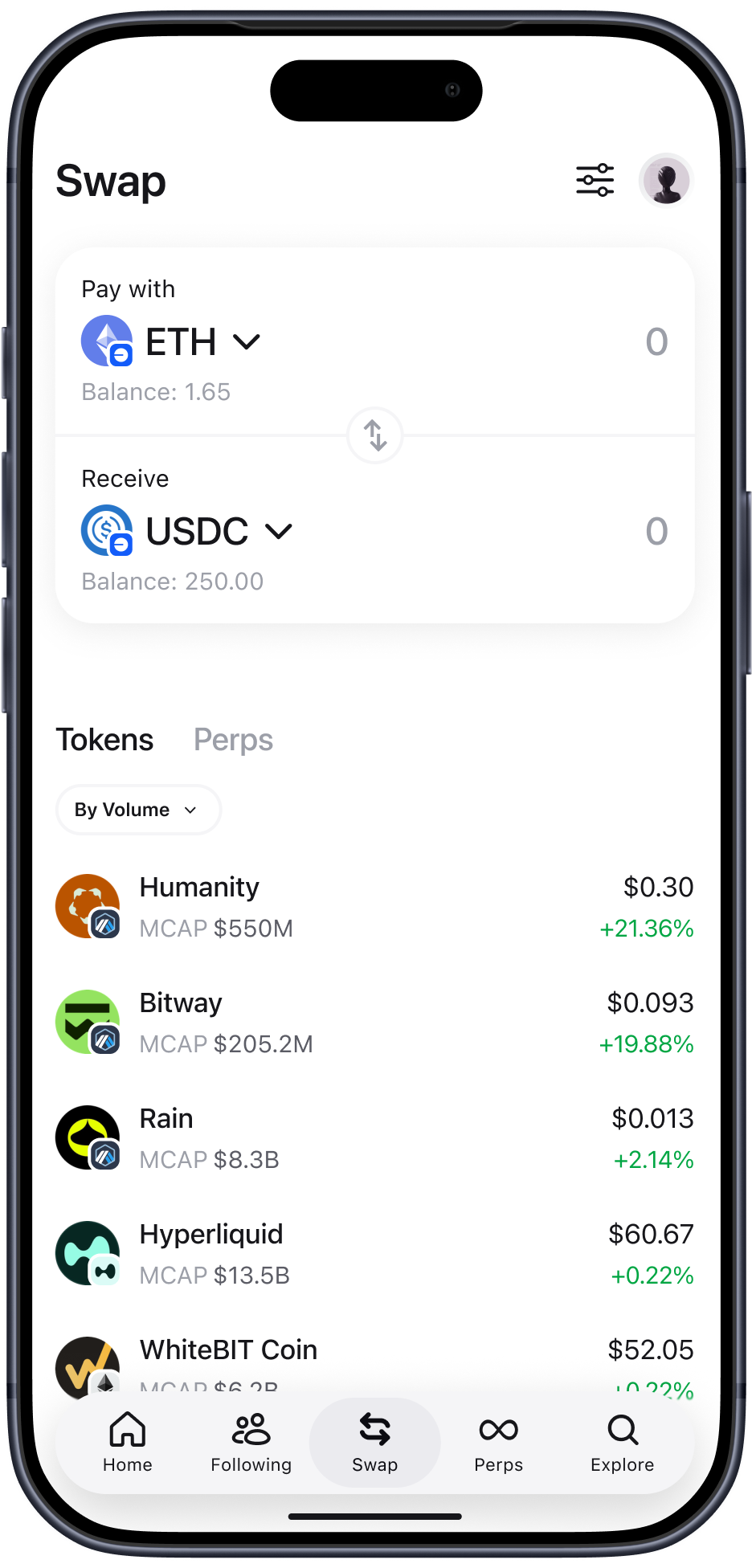
Swap
A fast trading surface for token swaps, cross-network trades, and market discovery.
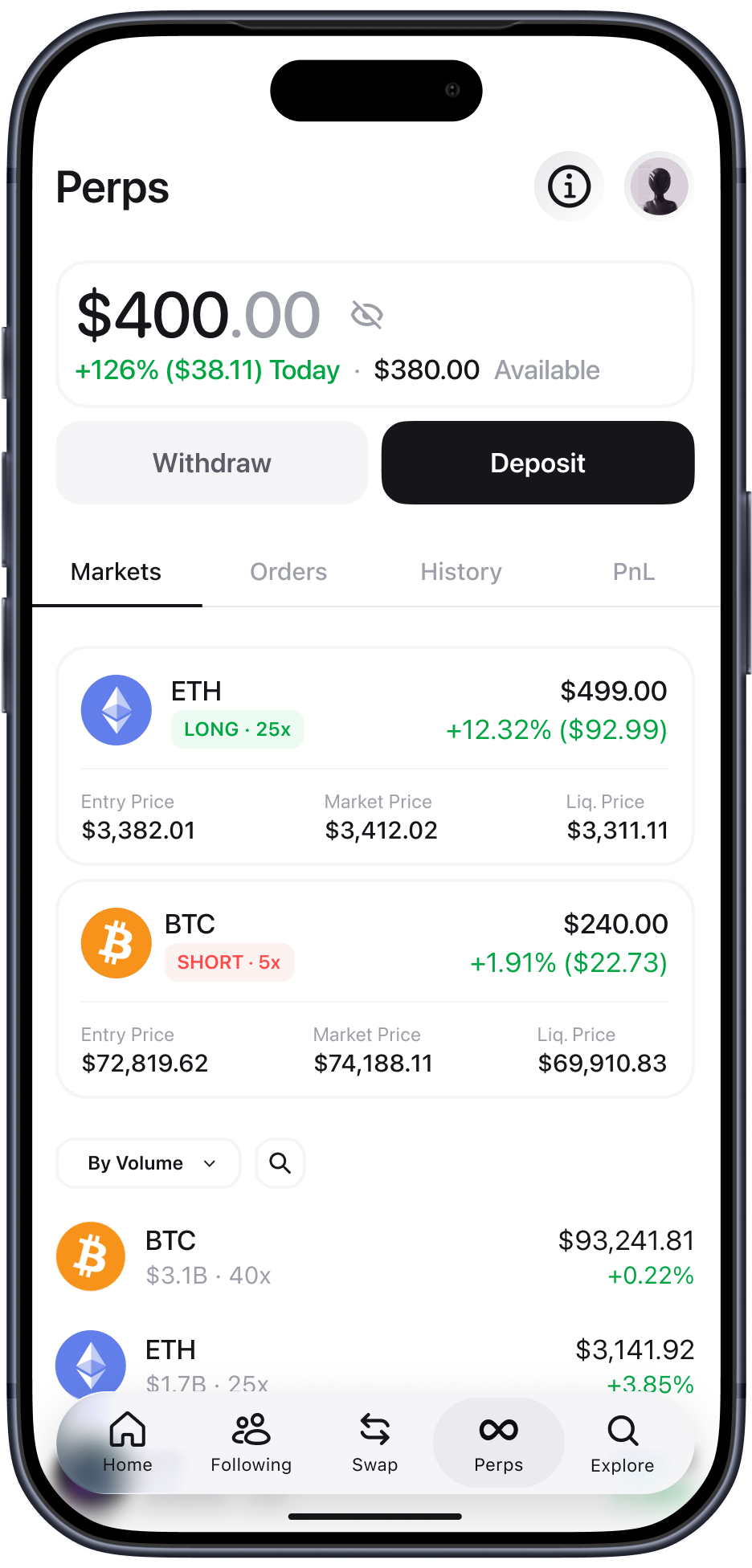
Perps
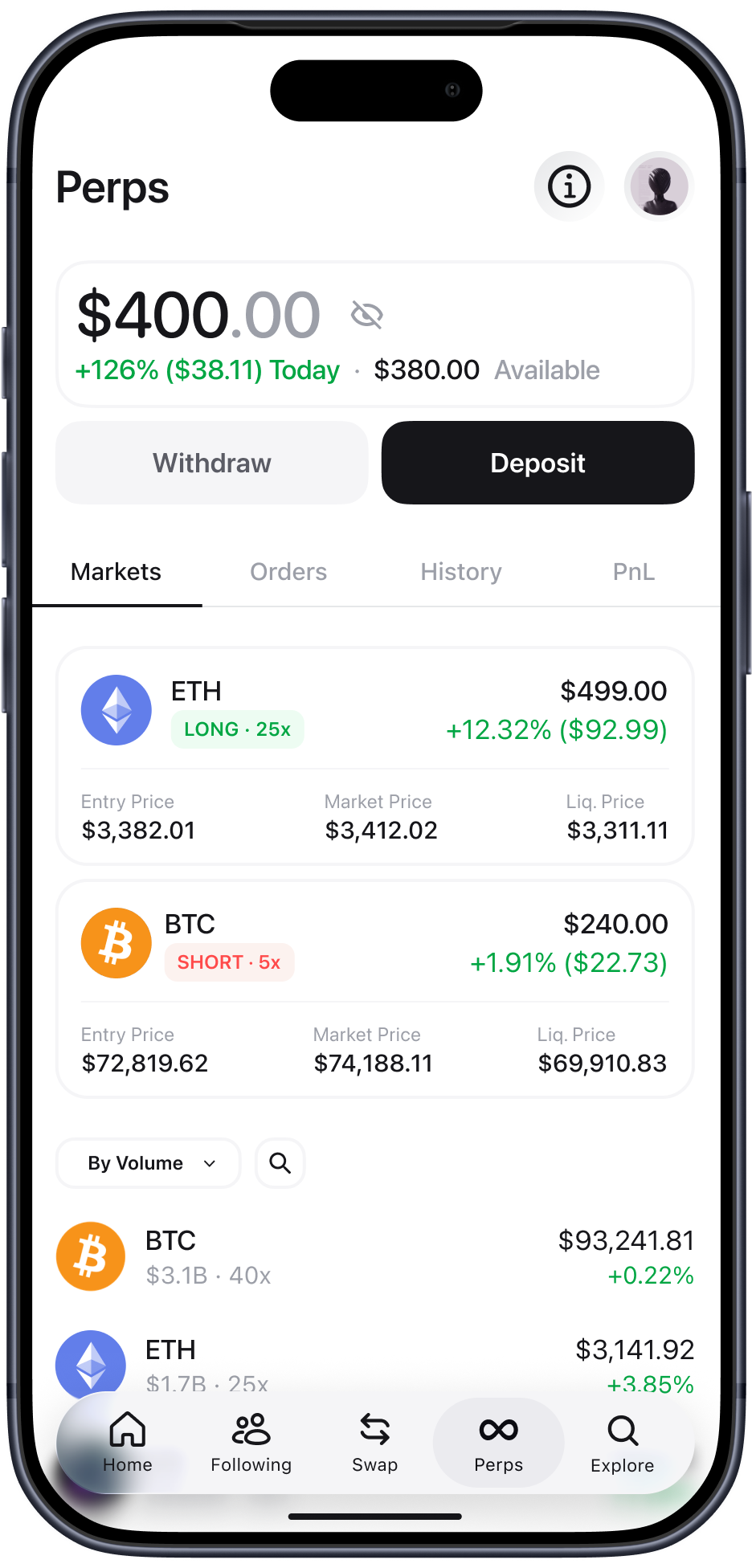
Dedicated Perps account with balance, positions, markets, PnL, and trading actions.
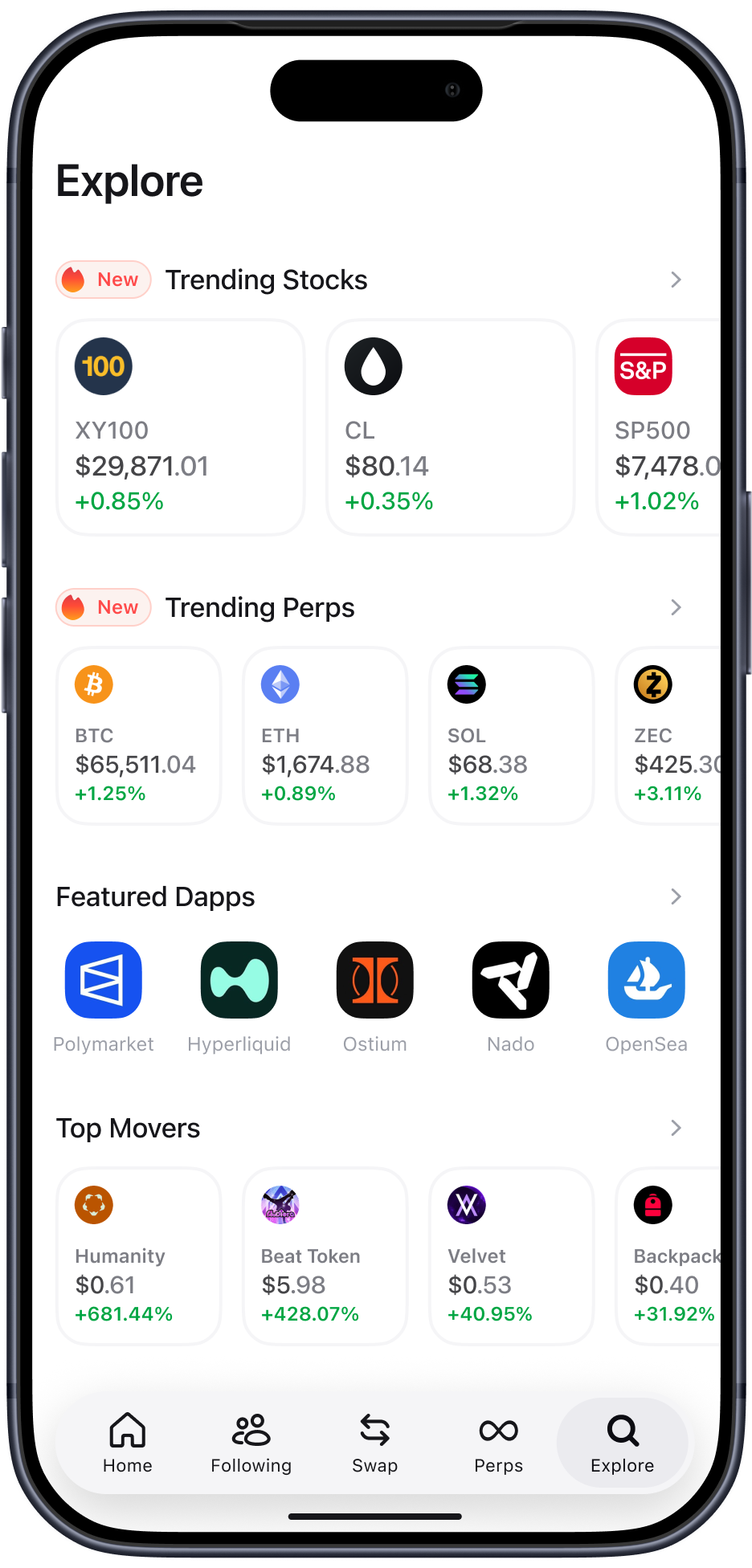
Explore
Market discovery across trending tokens, stocks, perps, dapps, and top movers.
Cross-network swap
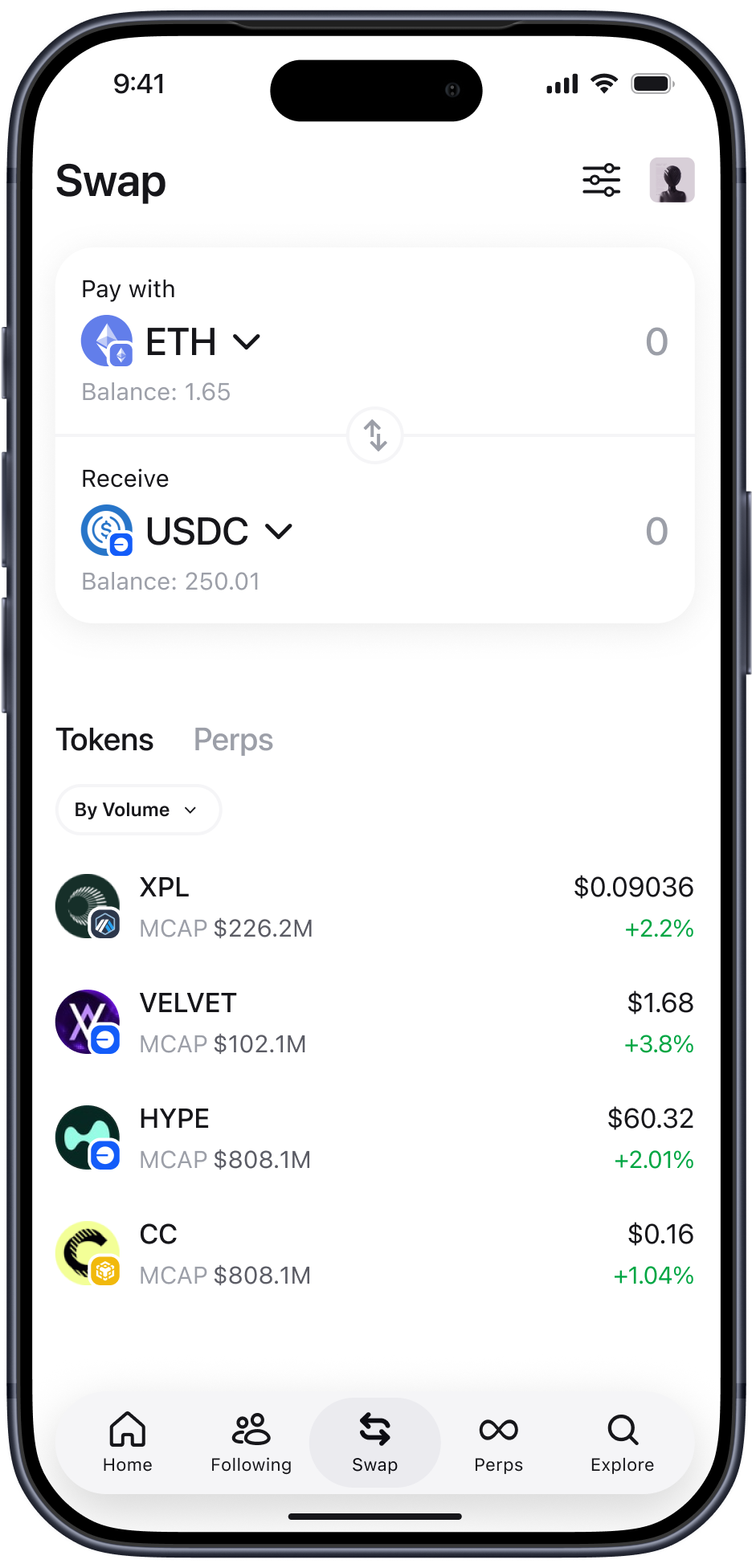
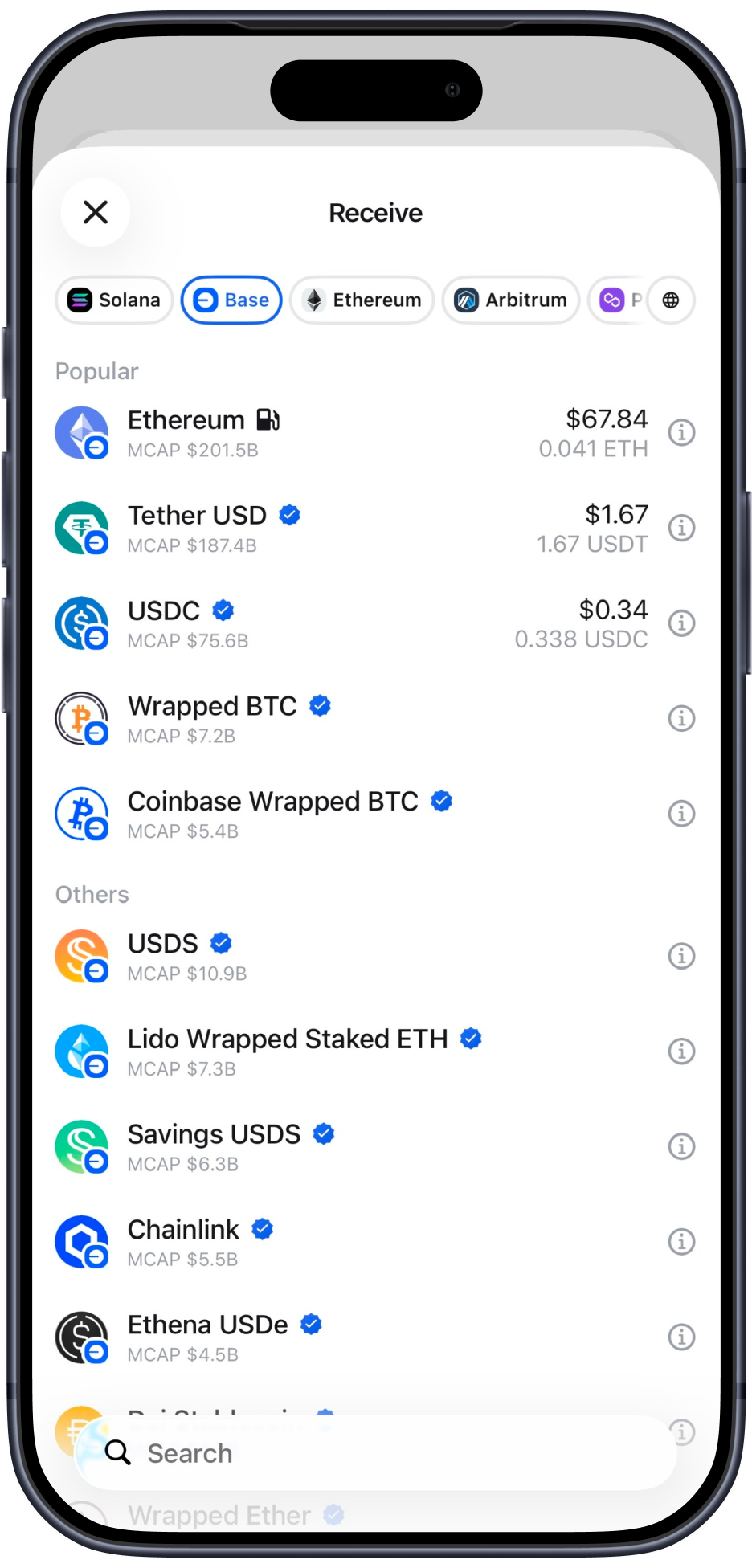
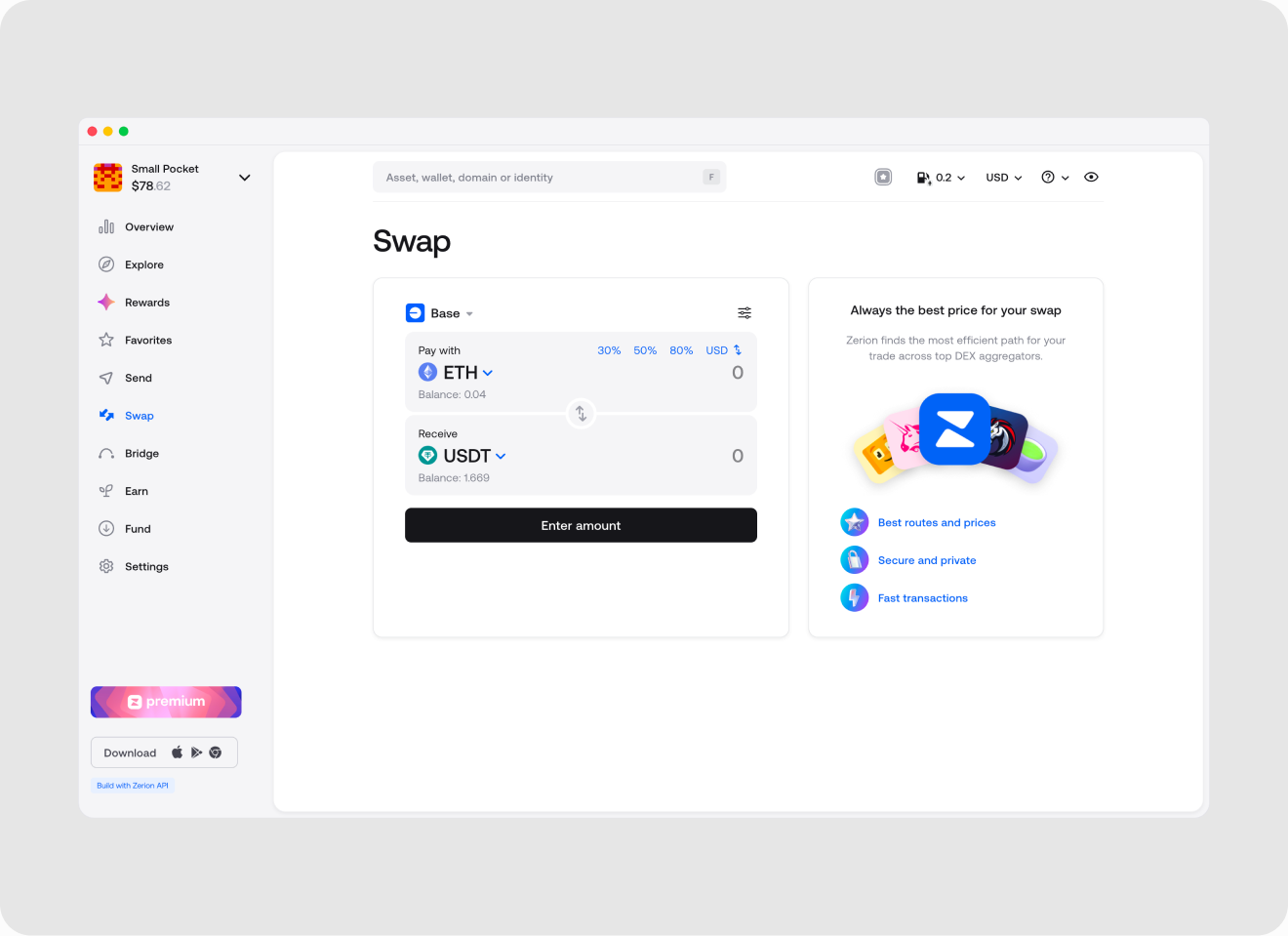
Swap was one of the most important product surfaces in Zerion.
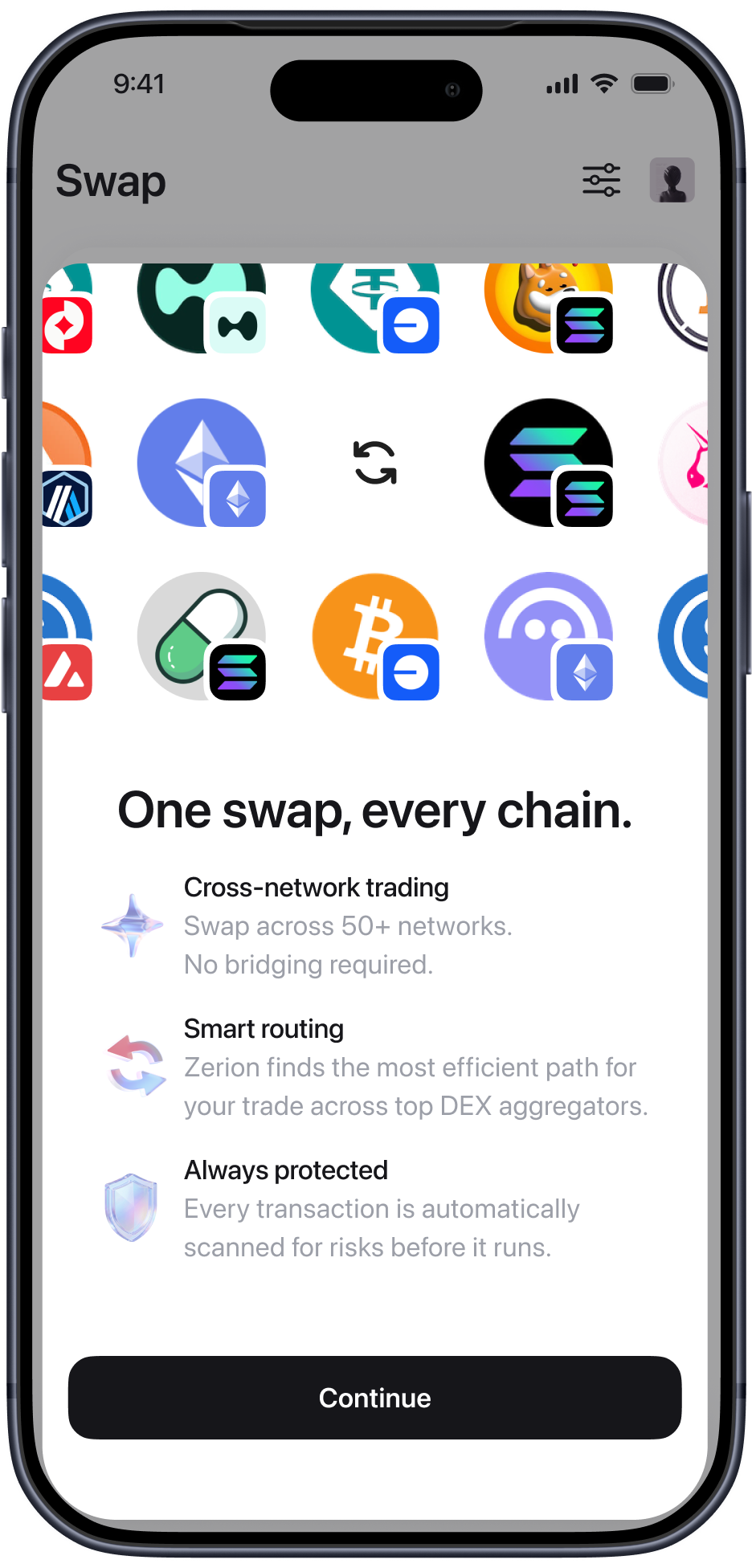
Together with the team, we redesigned it around cross-network trading, removing the need to think about bridges as a separate step. Users could buy or sell an asset from one network and receive it on another in a single flow.
My work focused on the current Swap interface, the animated toast, and the onboarding for this new experience. It was a large team effort across product, design, and engineering, with the full process covered in a separate case study.
Perps trading
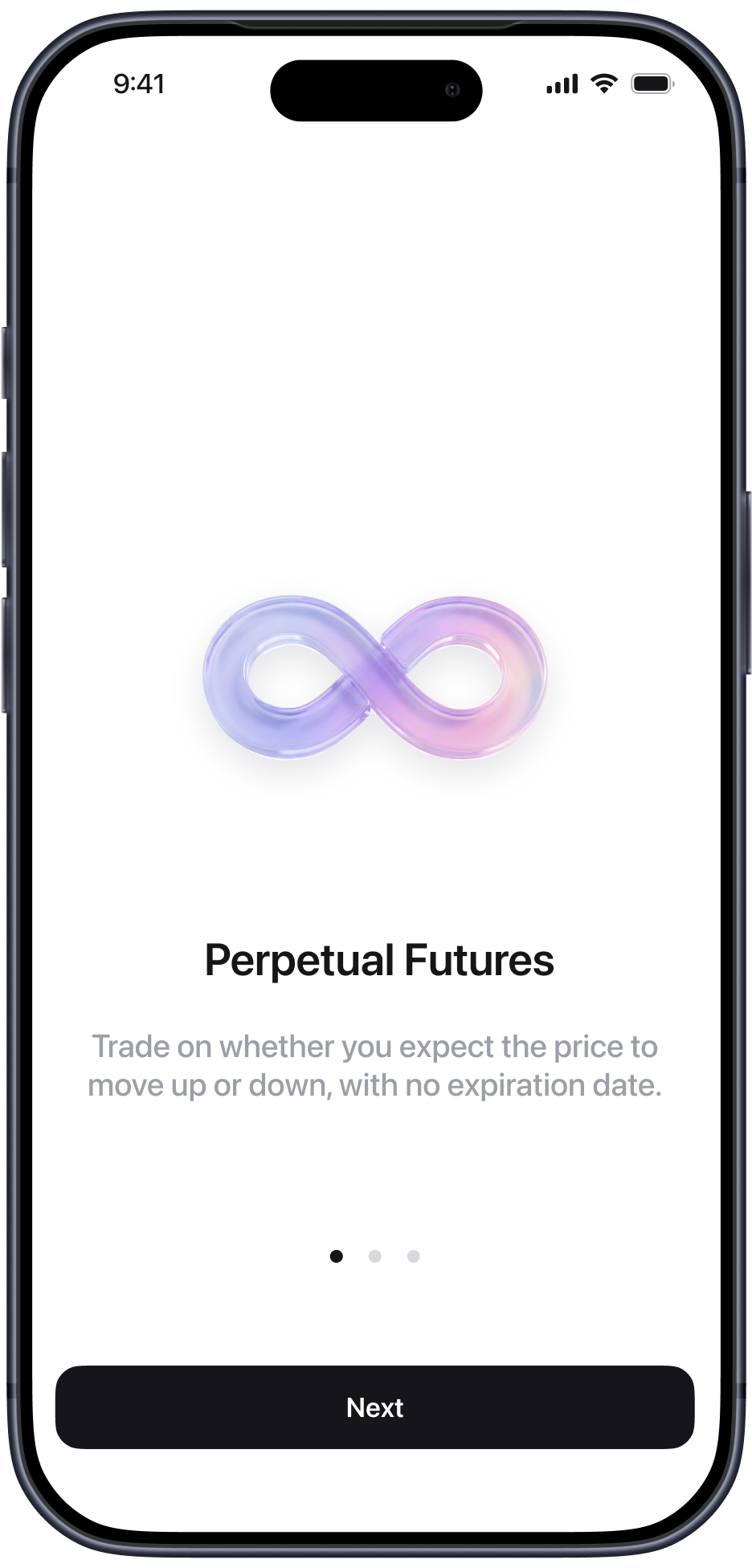
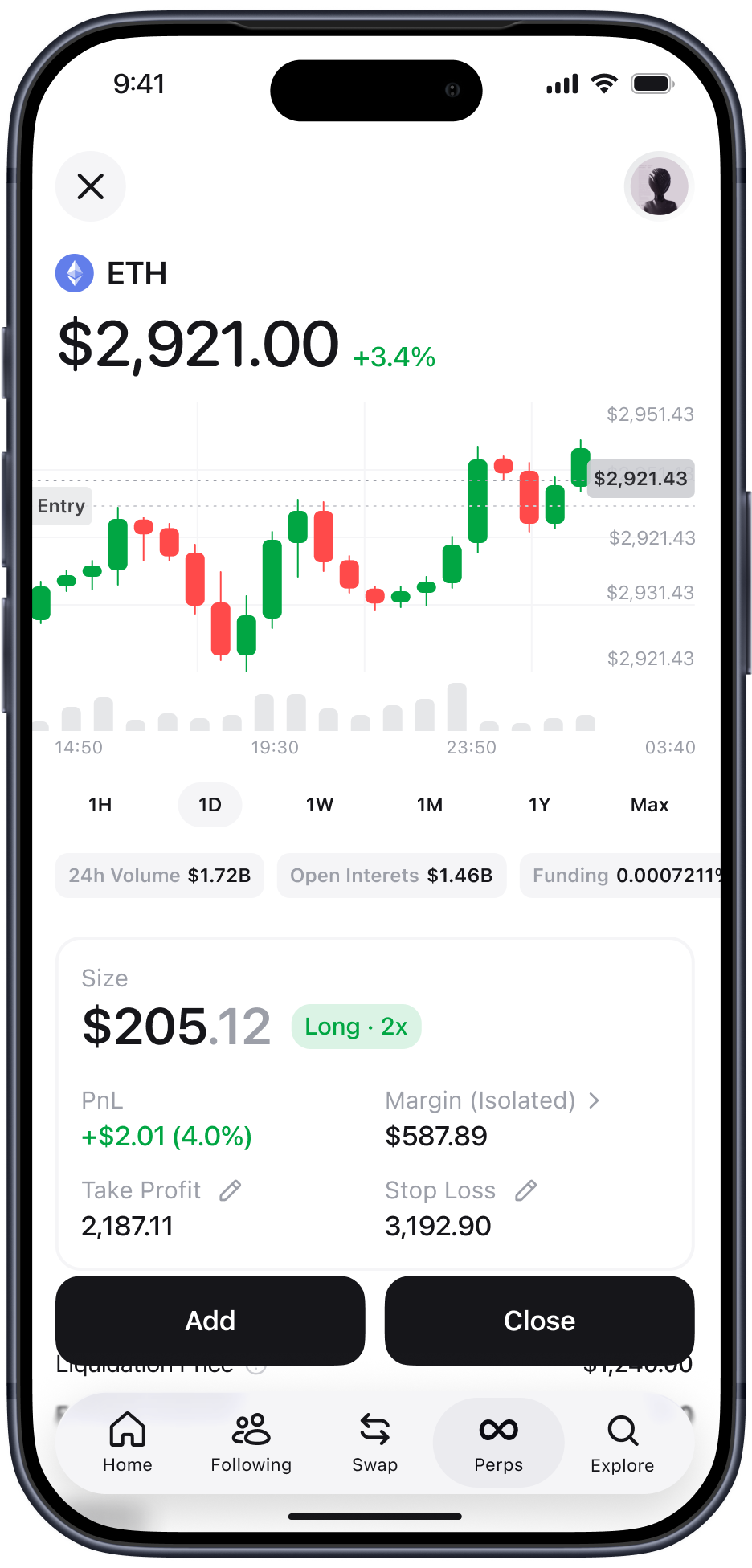
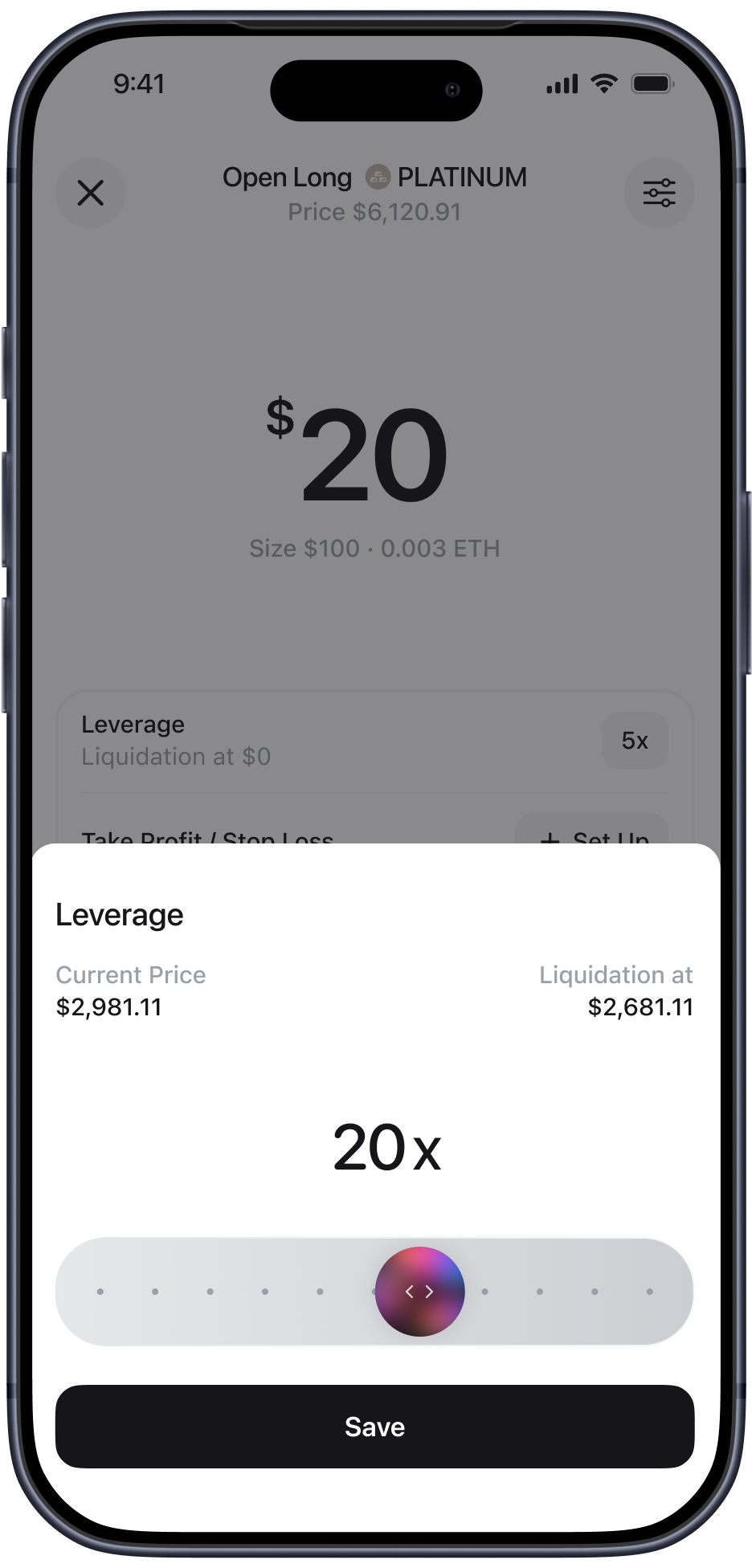
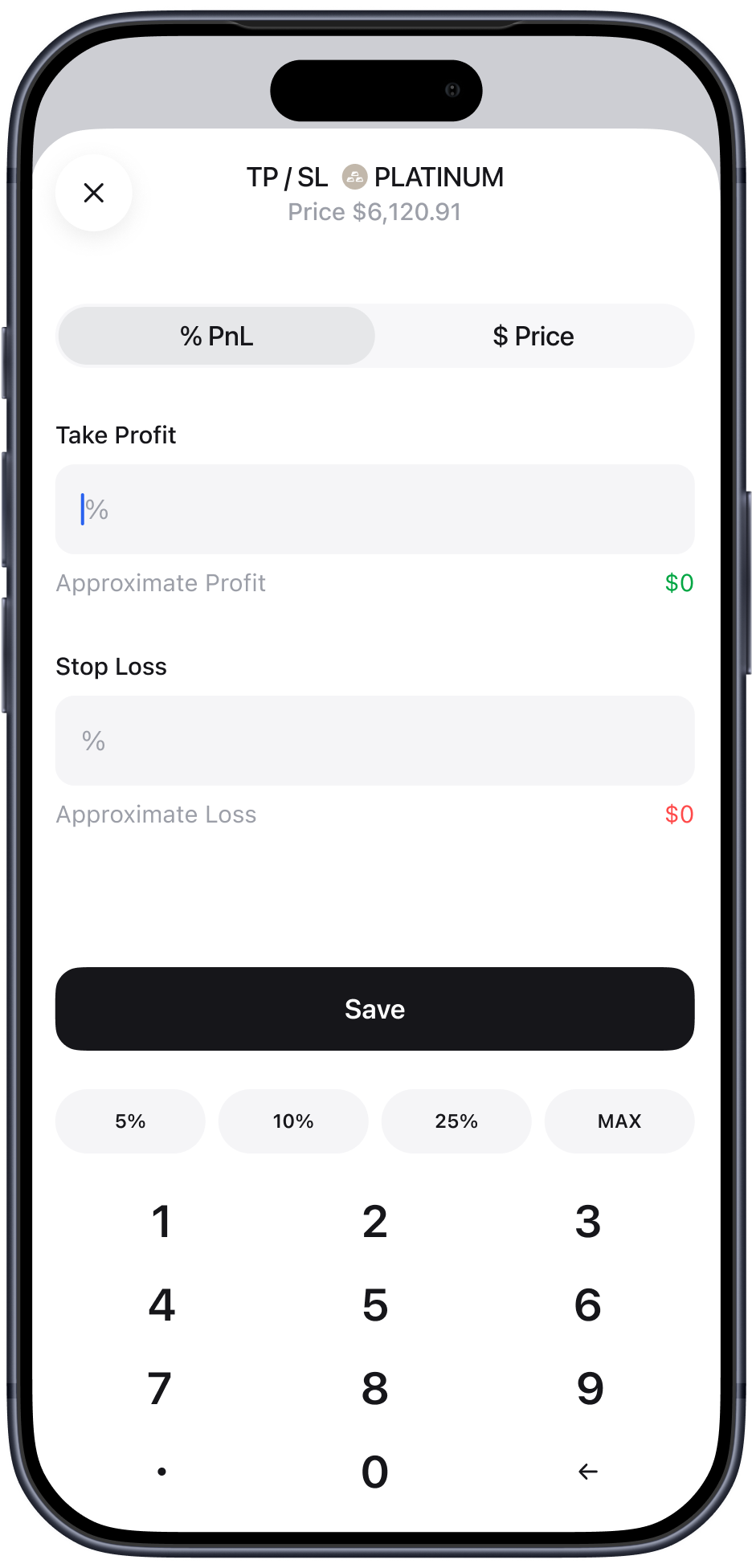
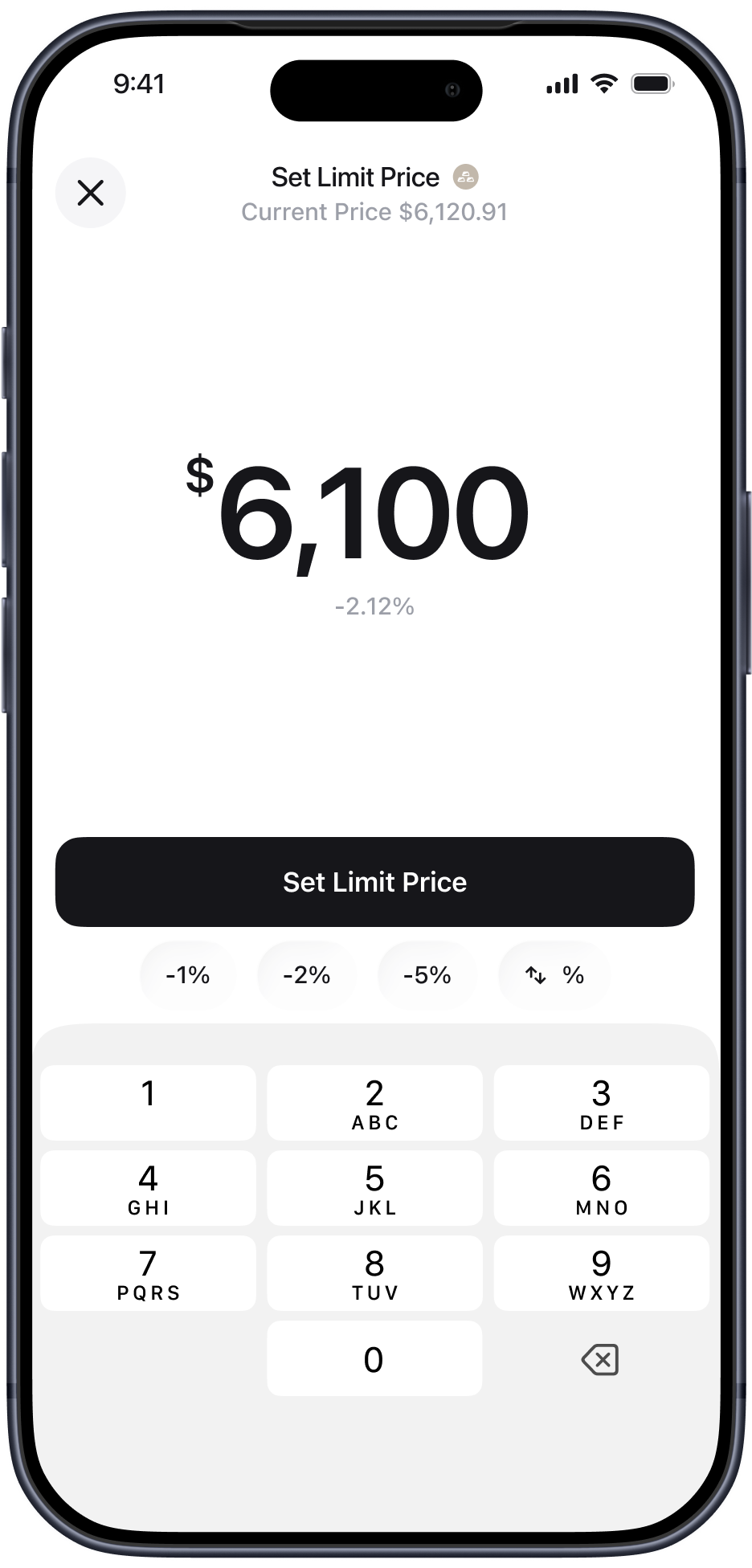
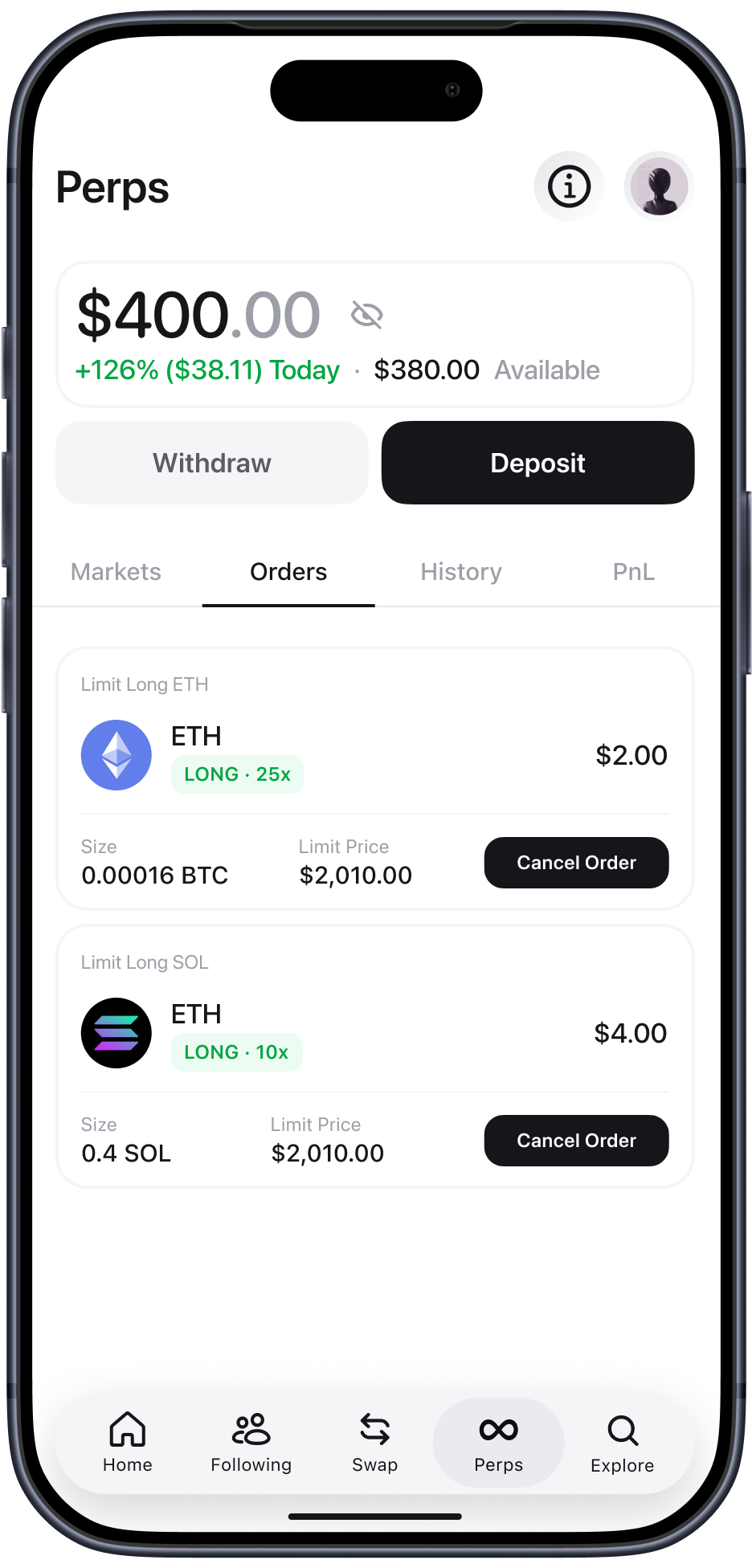
Perps were a strategic addition to Zerion: a new trading layer that expanded the wallet from portfolio management into a more complete trading experience.
I led the design work from research to final design in under 3 weeks. Maze testing with 89 participants showed that most users already understood perps, so the challenge was to make the flow clear, fast, and familiar without overloading it with education.
My work covered competitor research, flow validation, product structure, and the final interface. The feature shipped, started earning revenue through referrals, and opened a fast iteration loop: PnL for positions, a dedicated Perps tab, and limit orders.
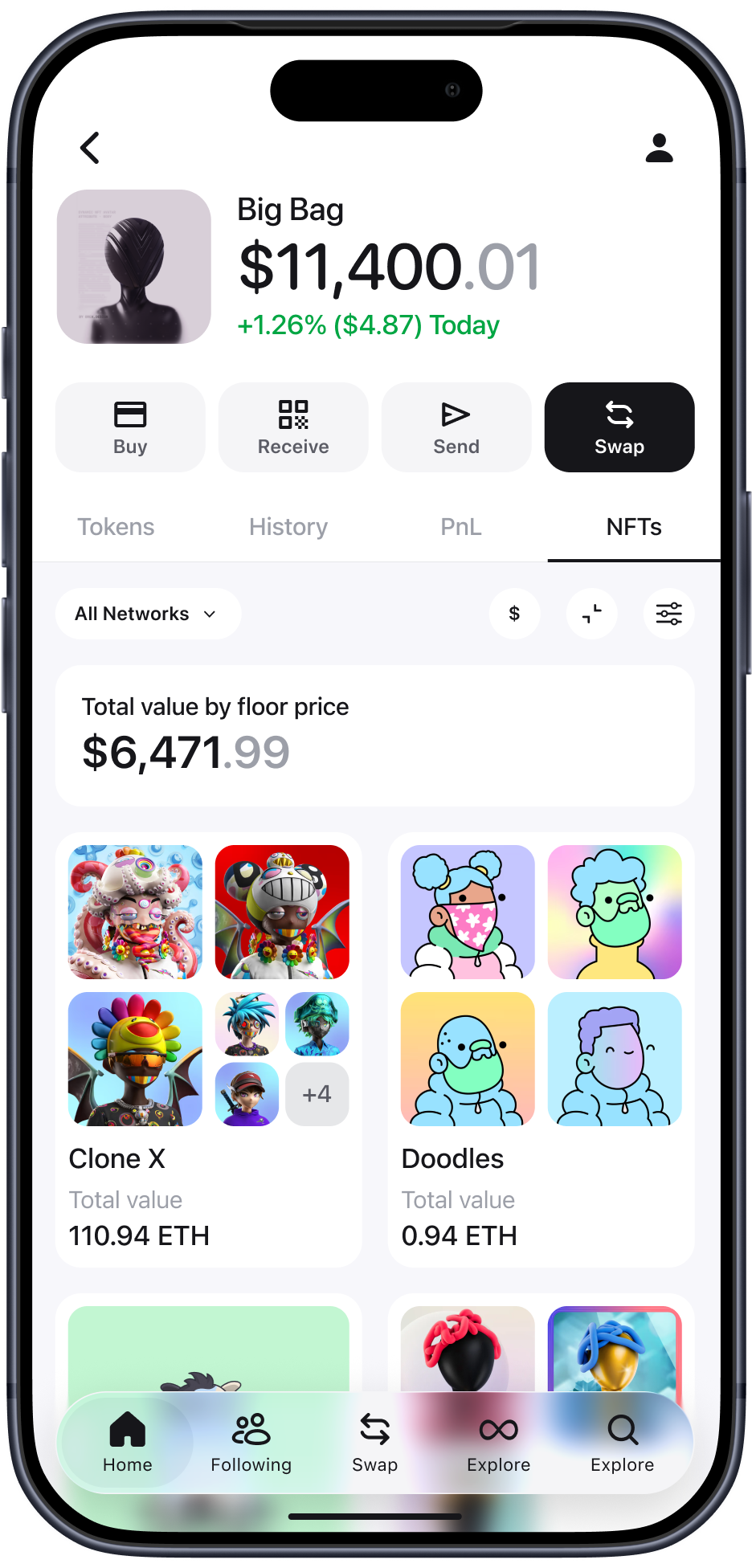
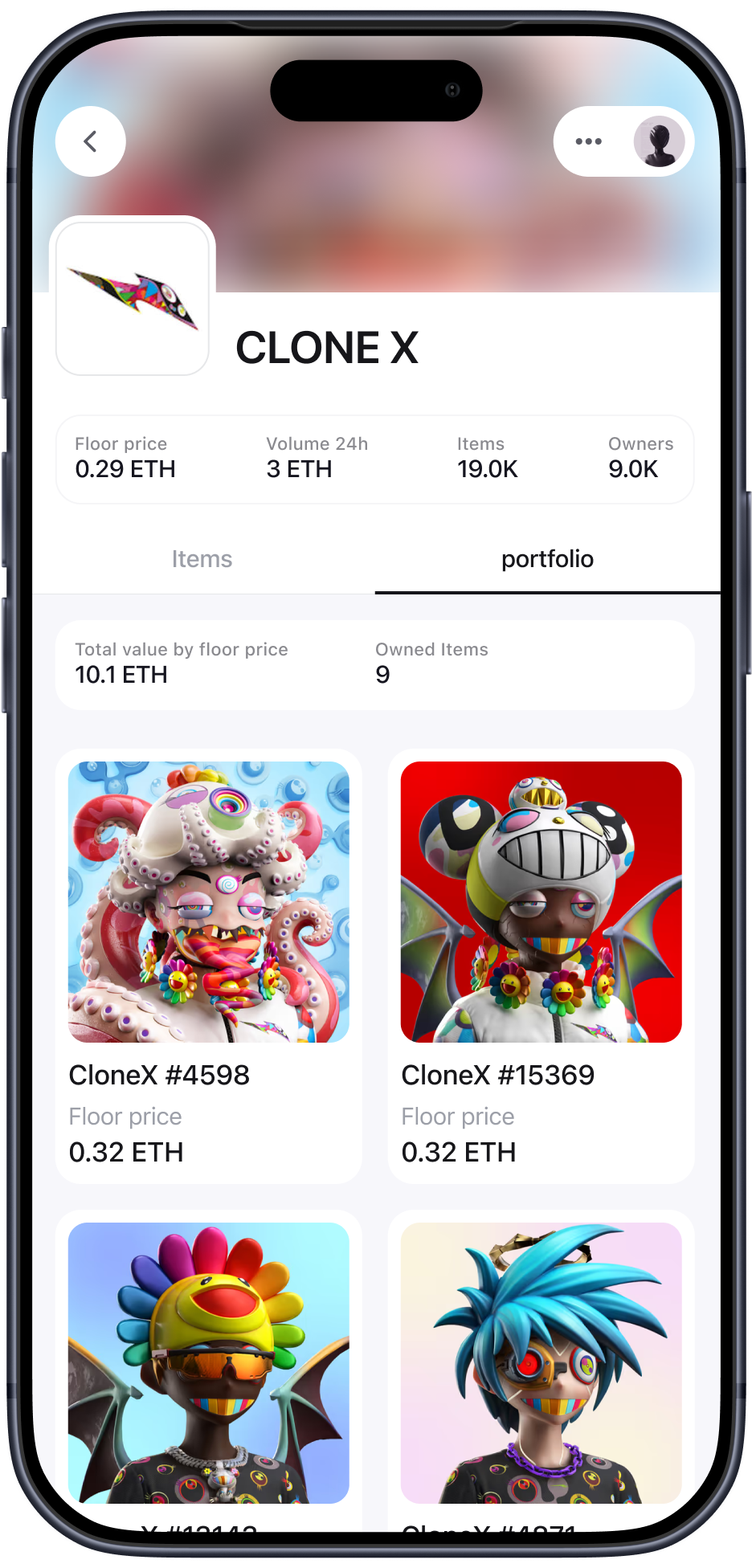
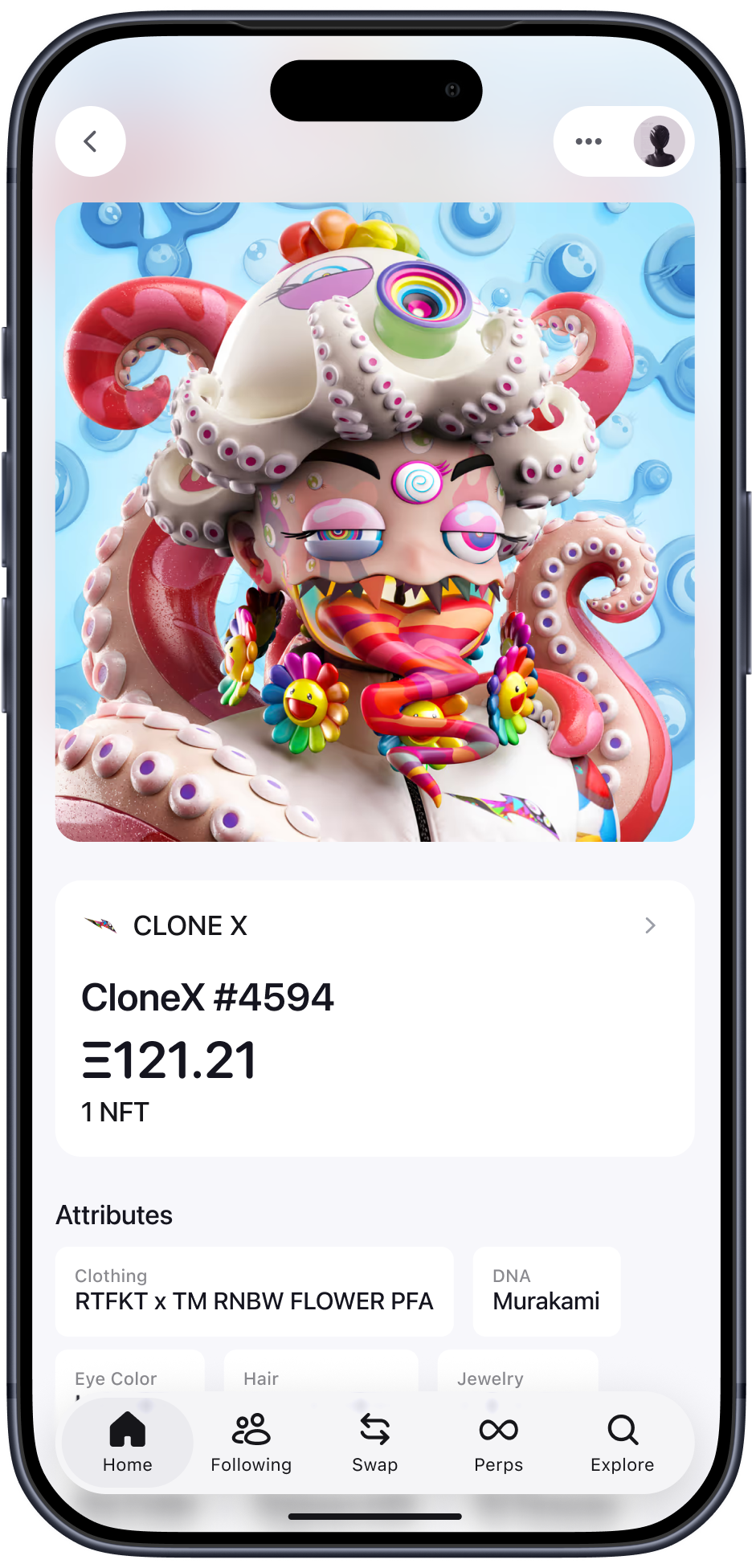
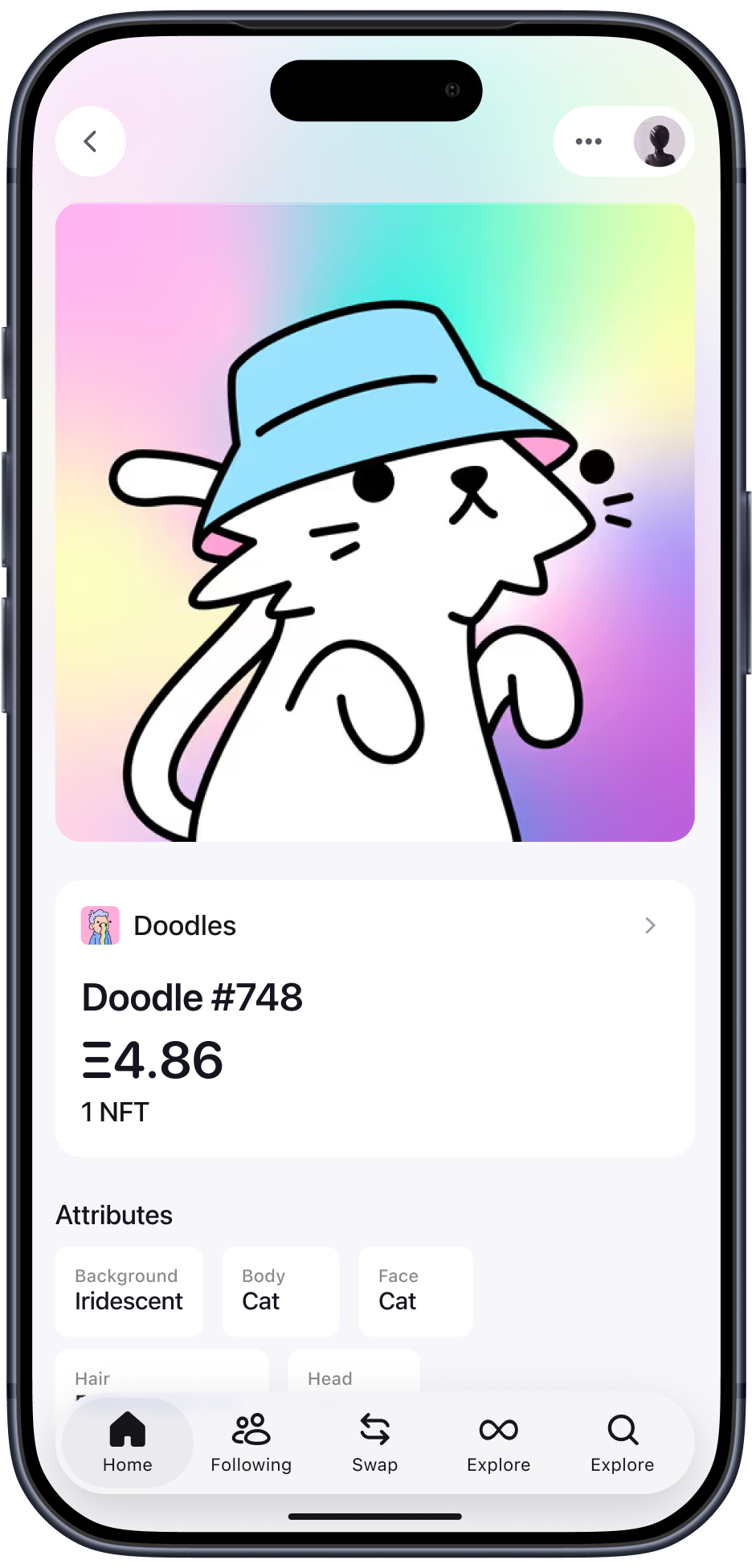
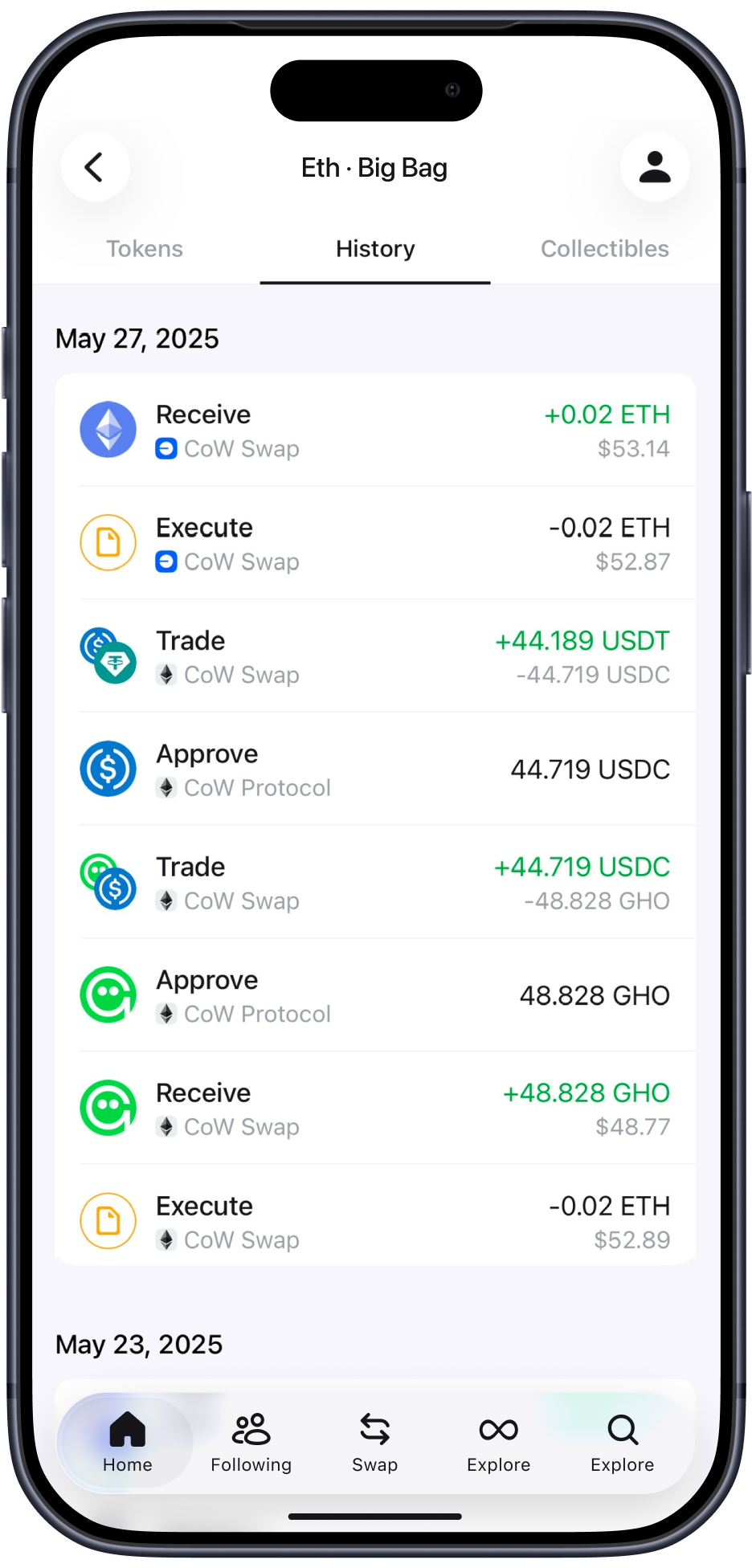
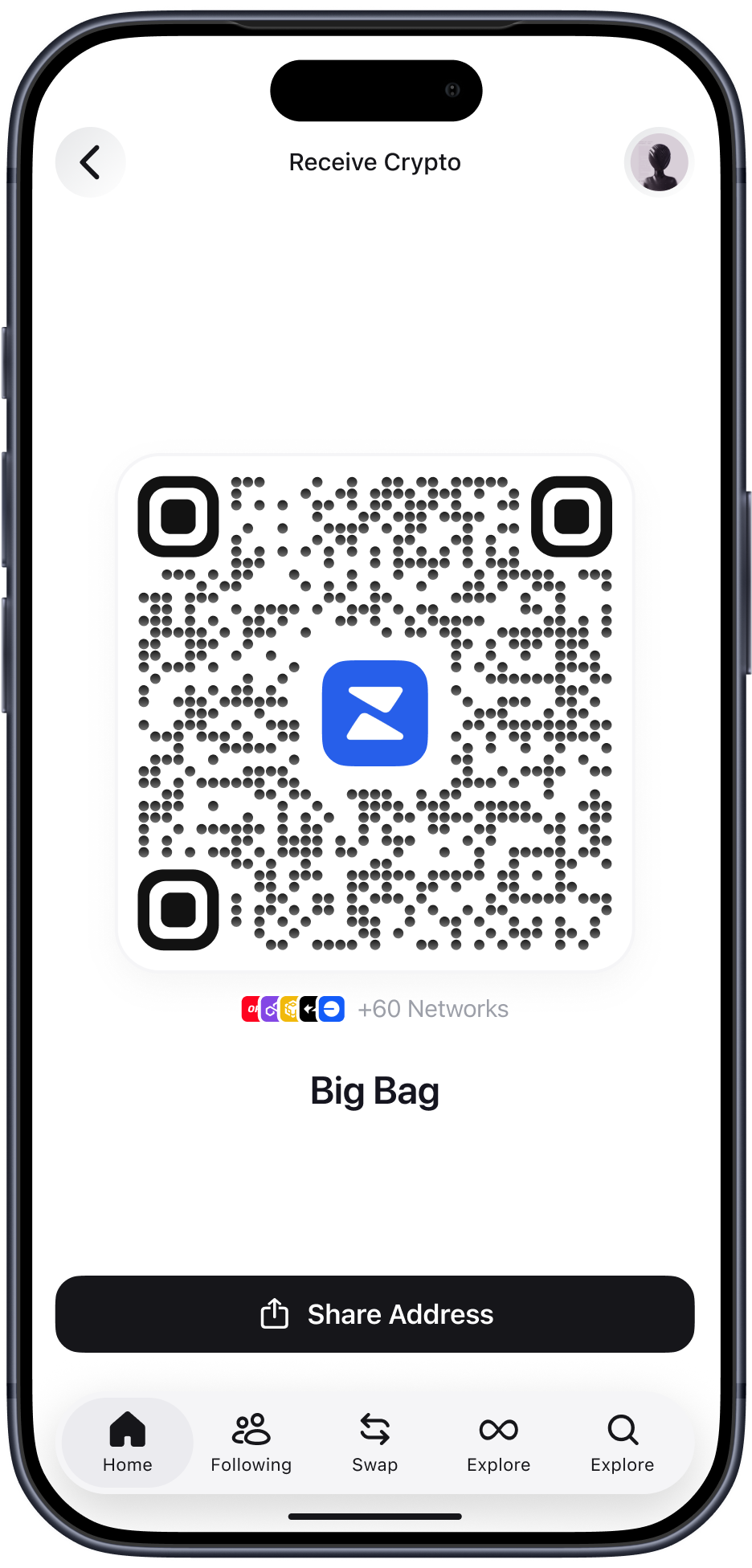
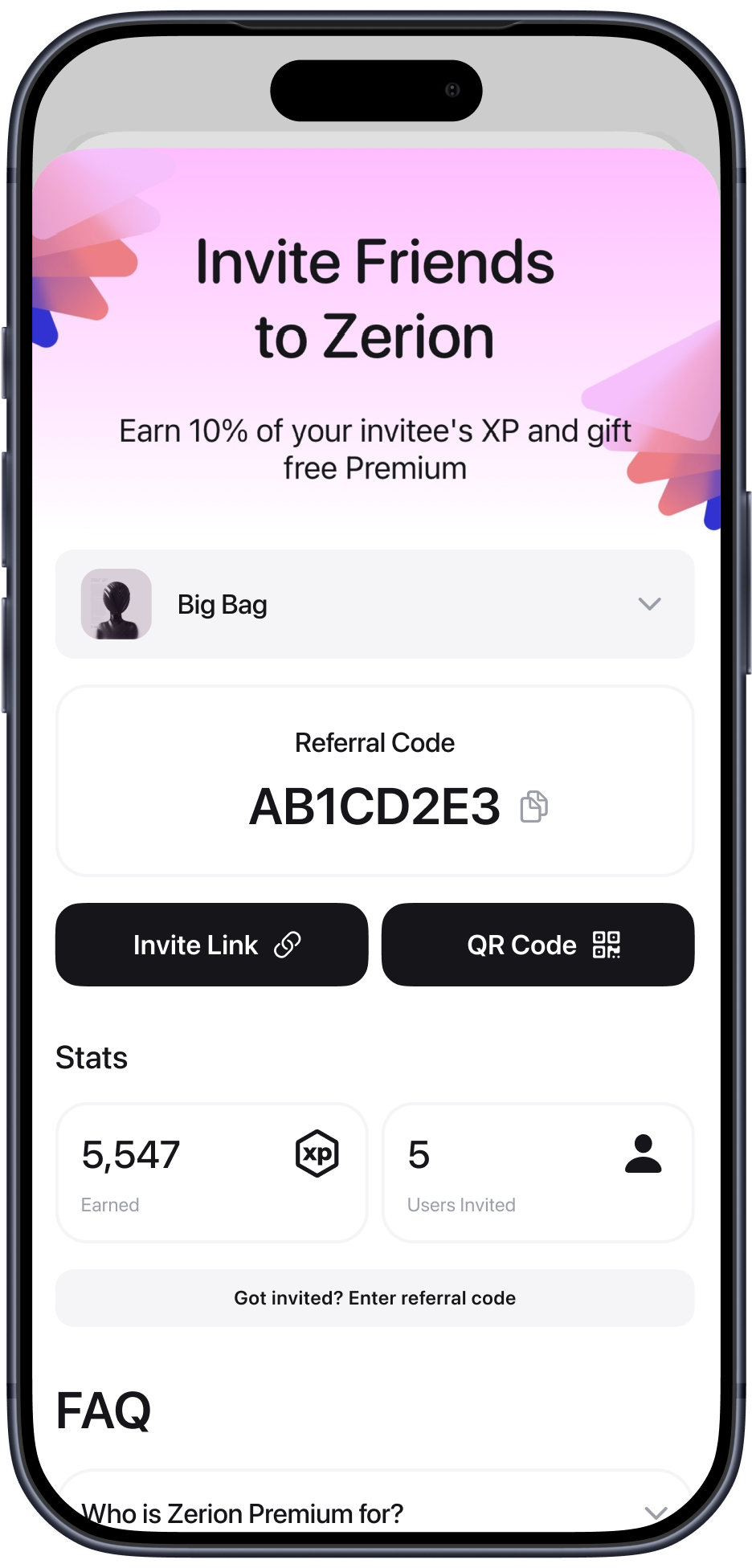
Specific wallet view
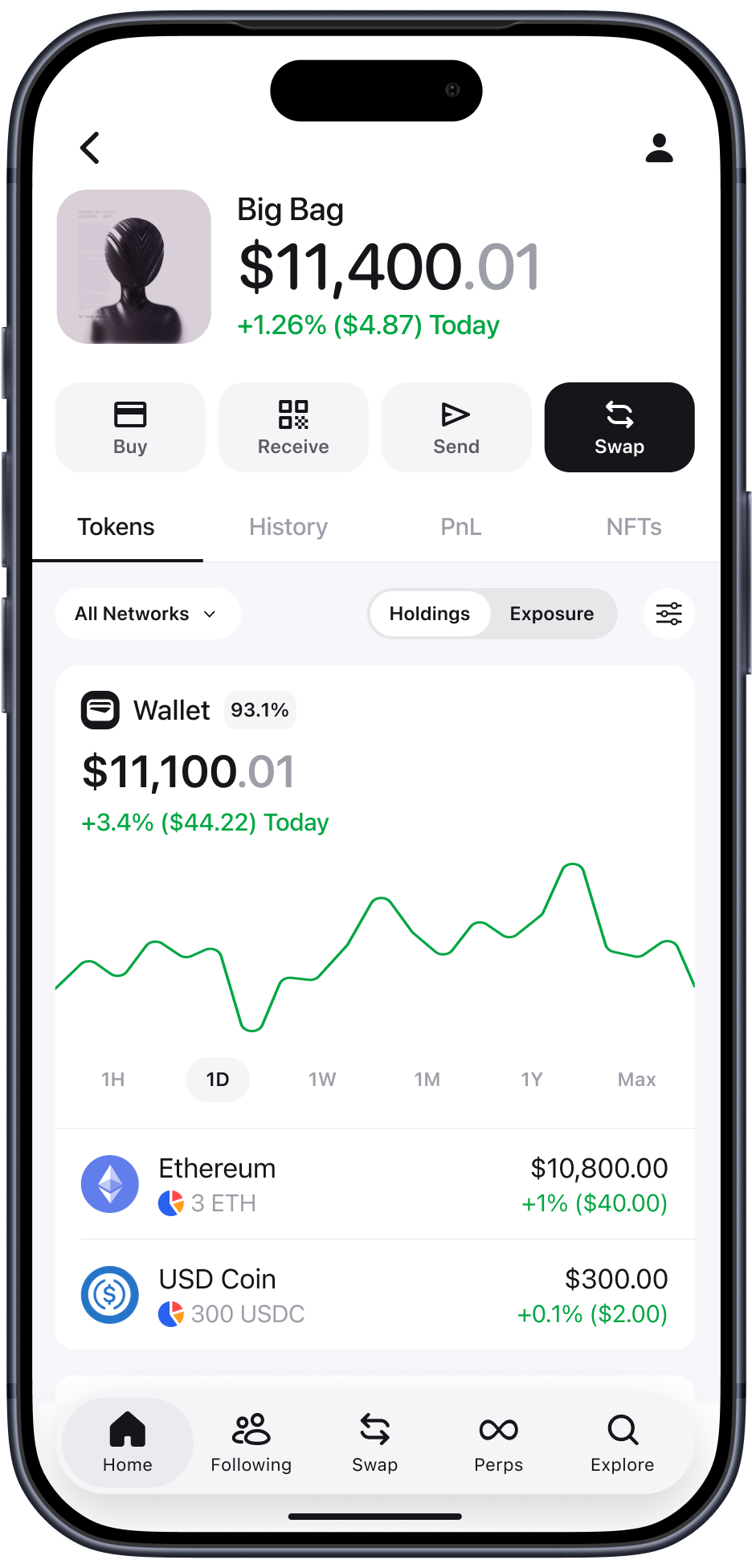
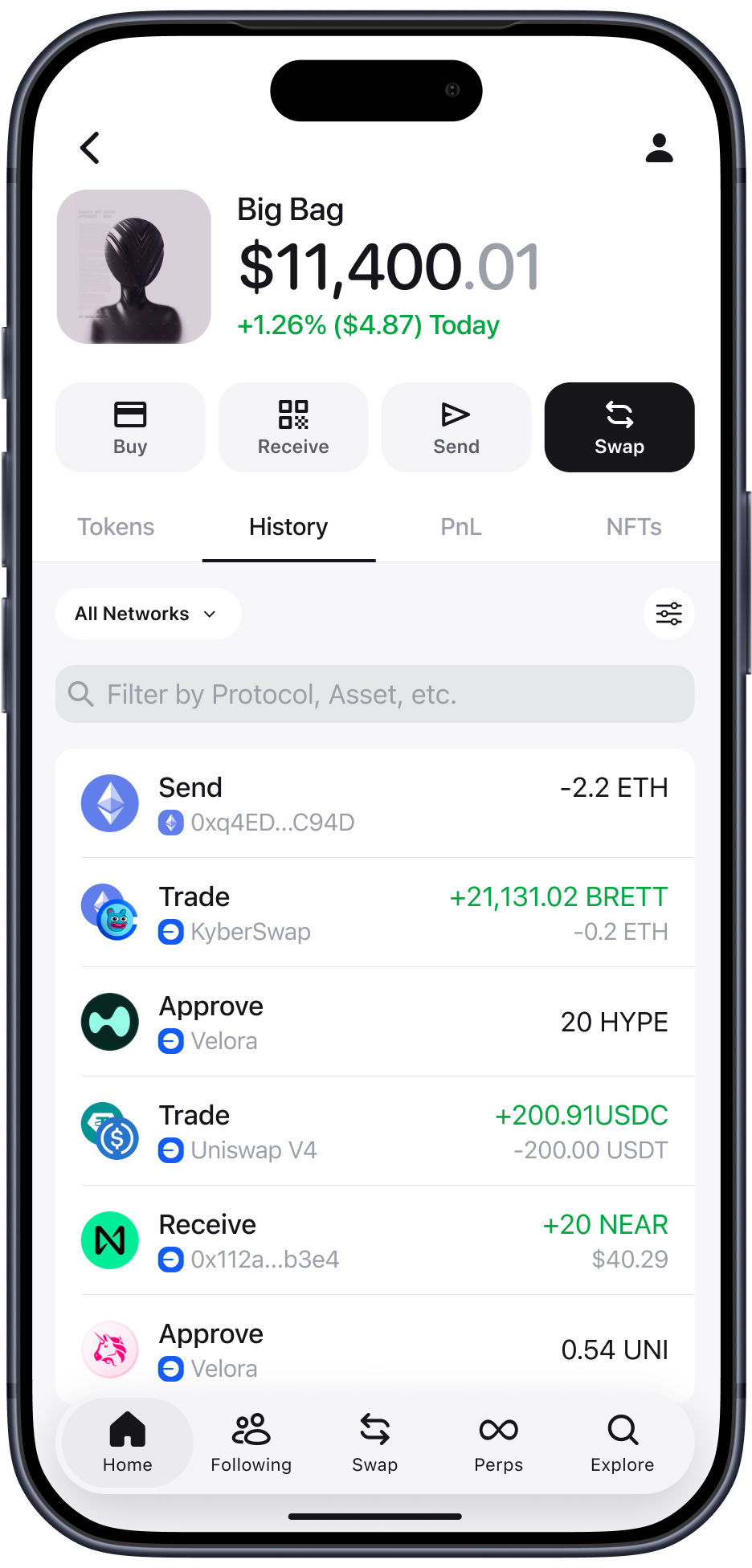
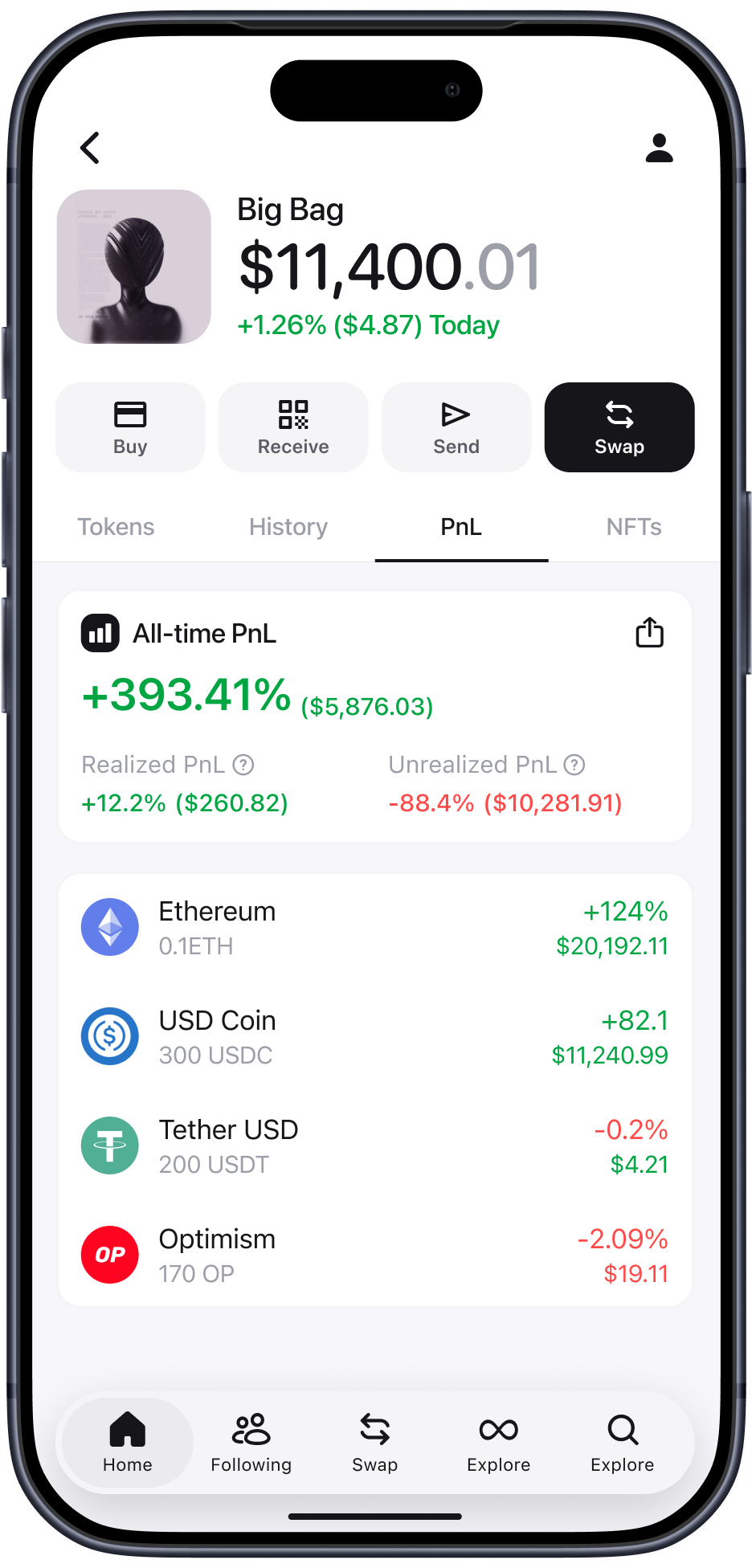
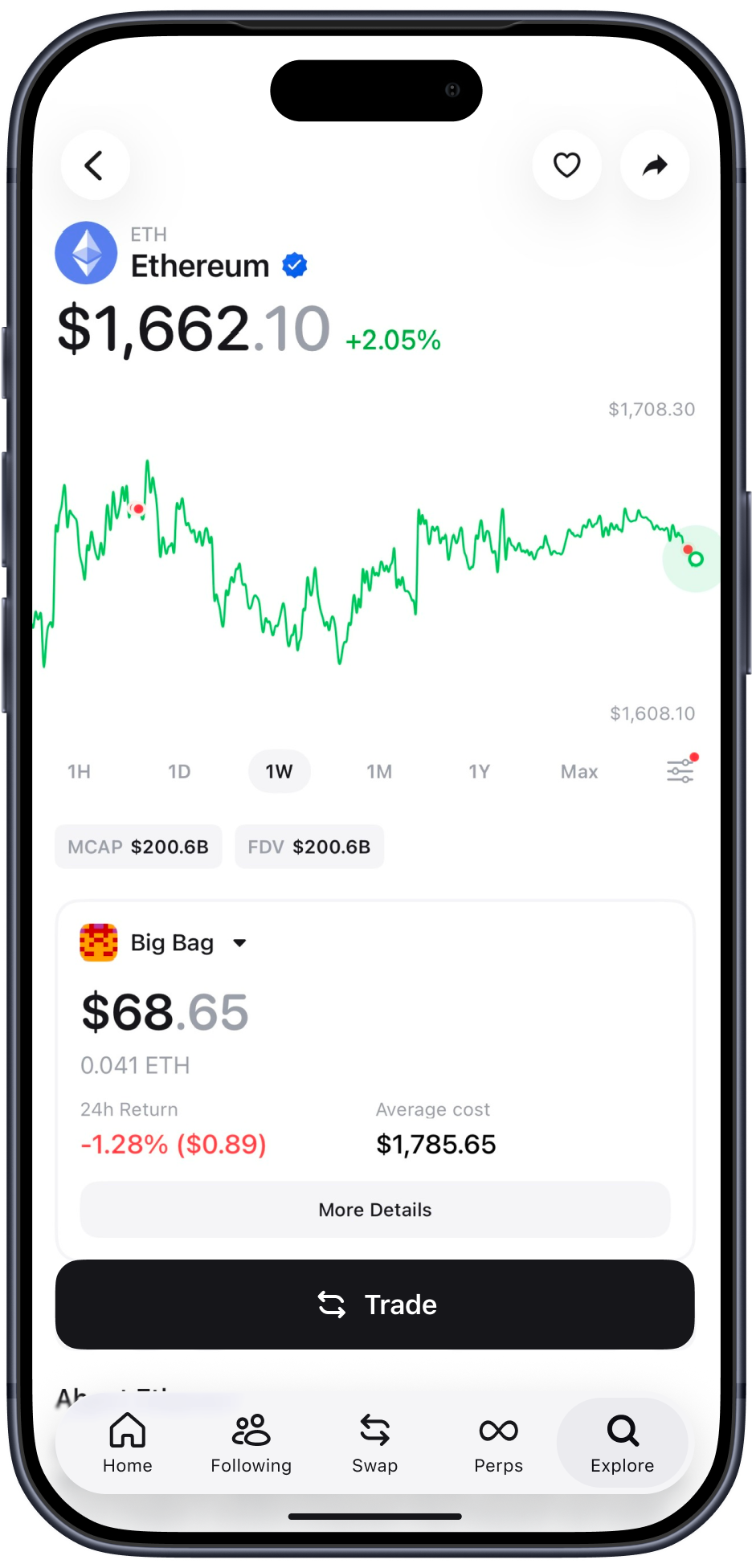
The specific wallet view was designed as a fast, readable report for a single wallet.
I owned this core product area directly, shaping the structure, key information layers, and actions. The goal was to help users quickly understand what a wallet contains, how it performs, and what they can do next.
Safety features
Security was a core part of the Zerion experience, not just a technical layer.
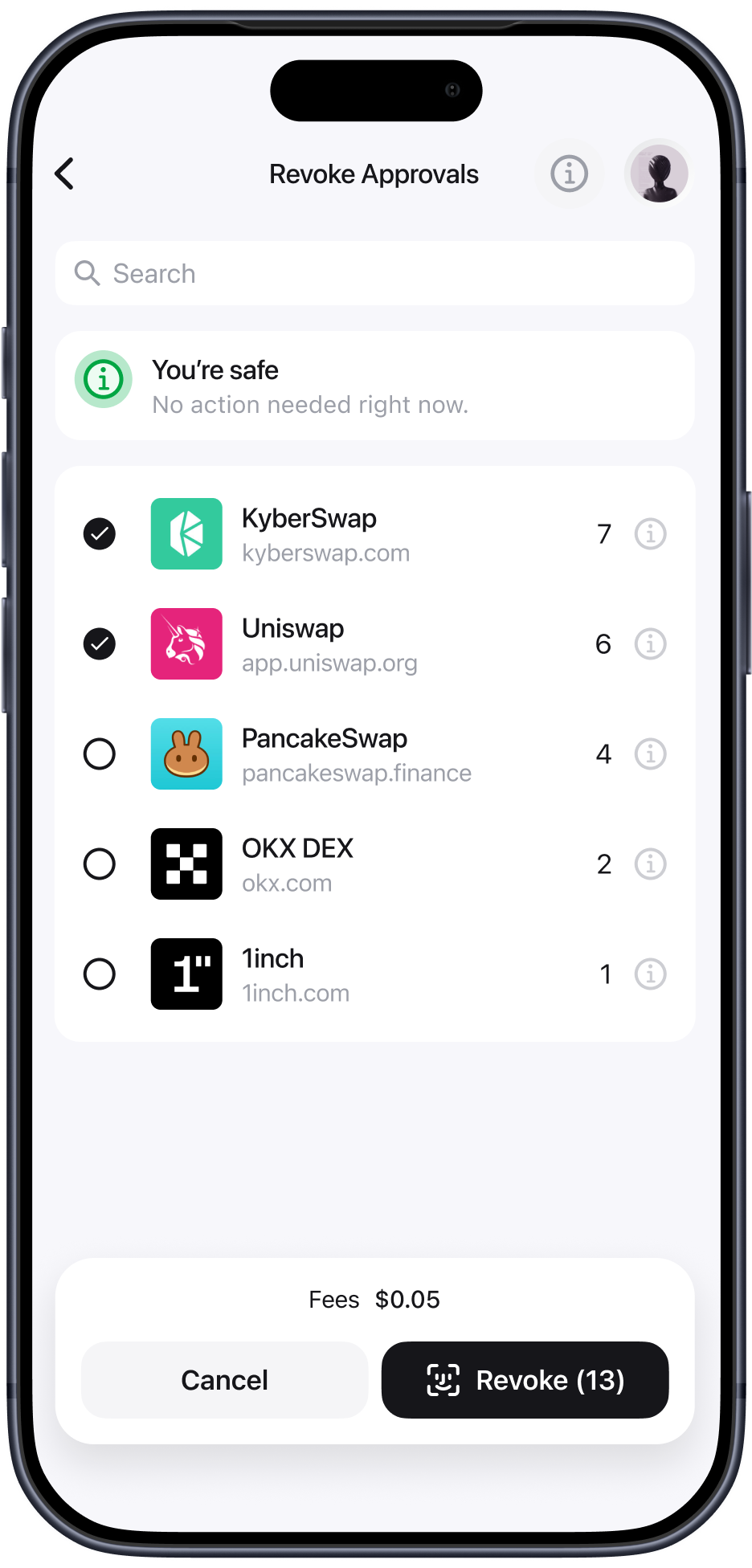
The team invested in audits, testing, and security reviews, while the app added transaction safety with external partners like Blockaid. We also built Revoke Approvals, giving users a simple way to review and remove risky token permissions.
My work focused on making safety visible and understandable in the interface: transaction warnings, verified token indicators, and animations that gave users a stronger sense of confidence without adding friction.

Web
Portfolio tracking foundation
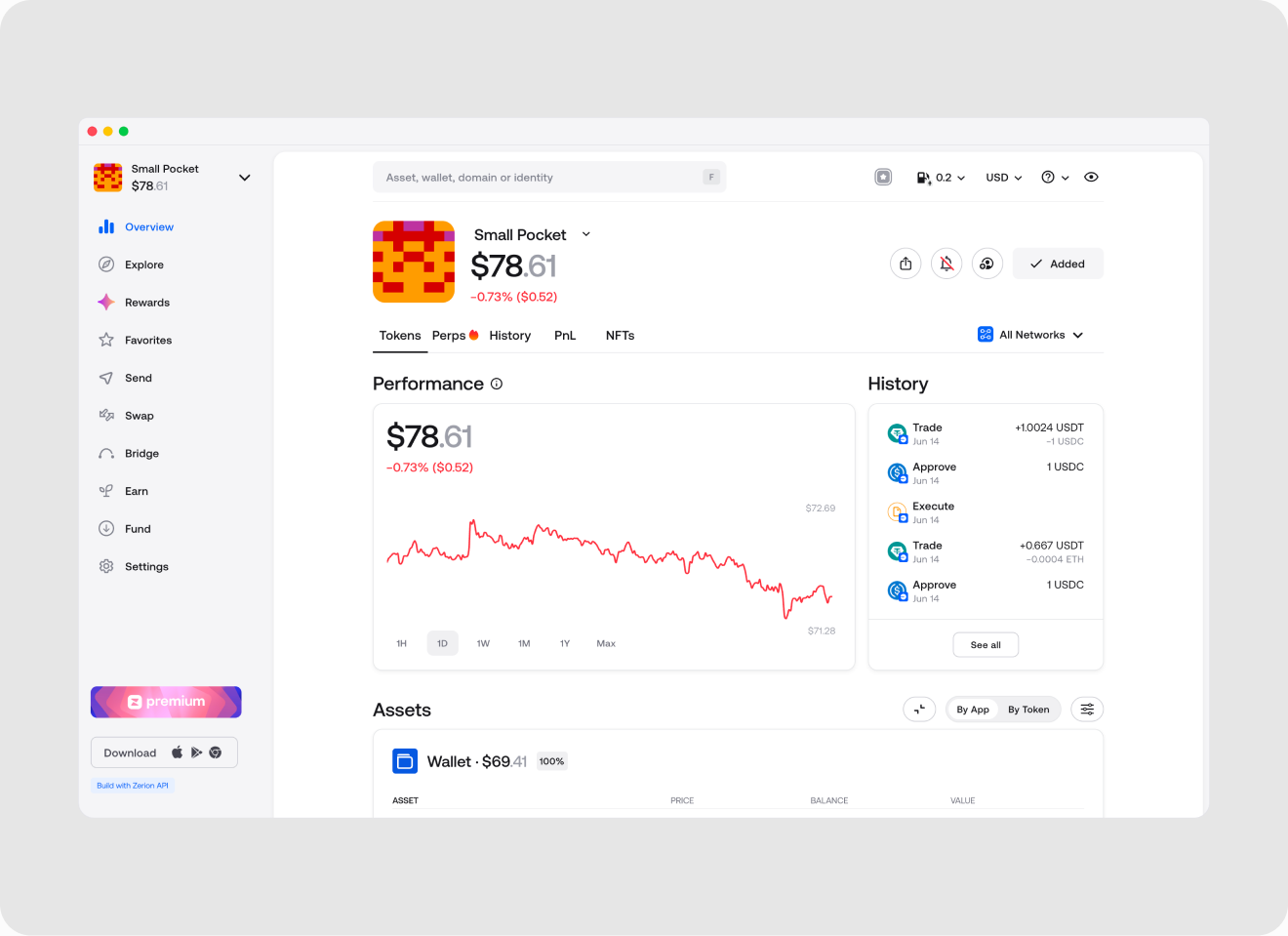
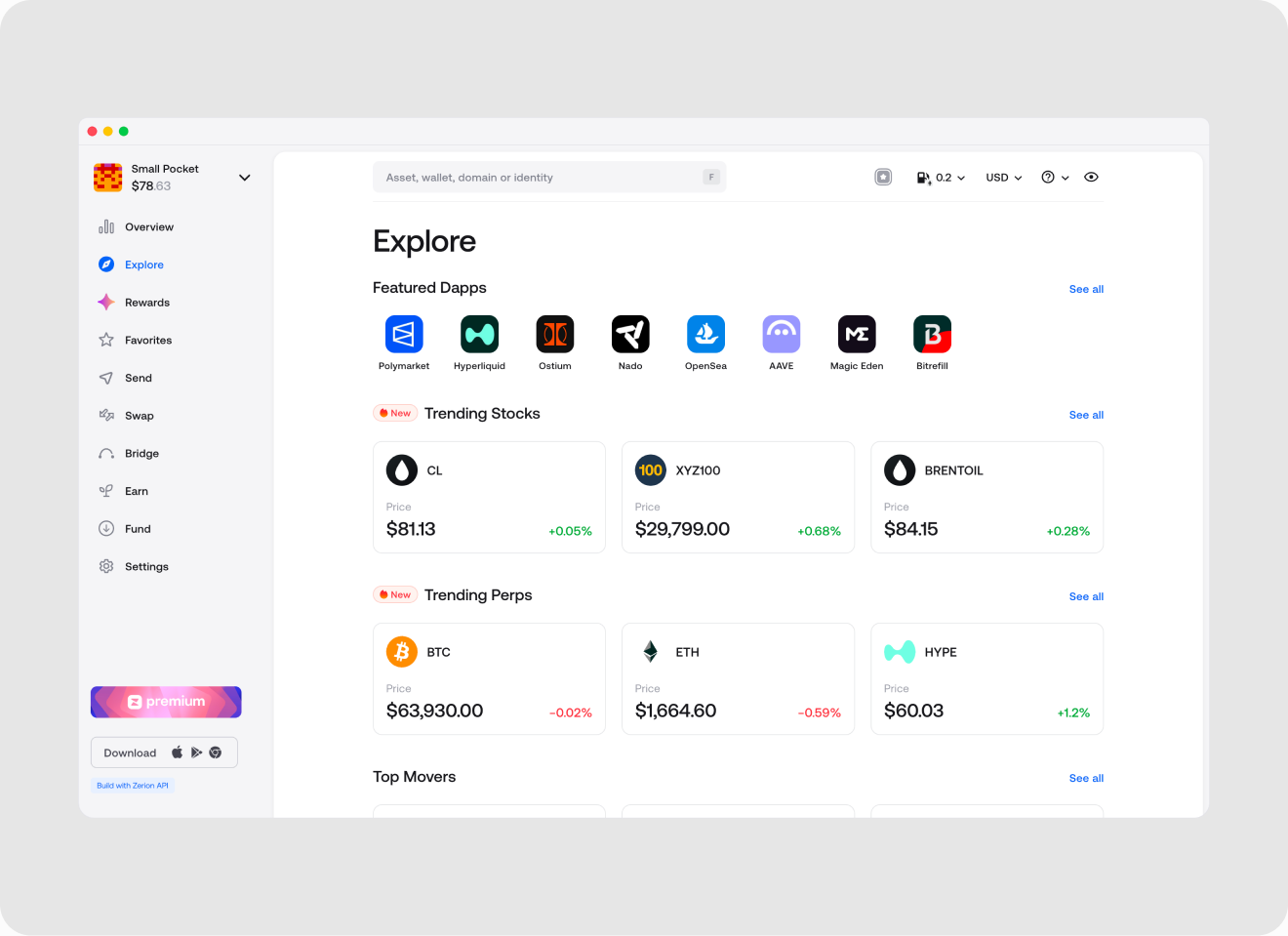
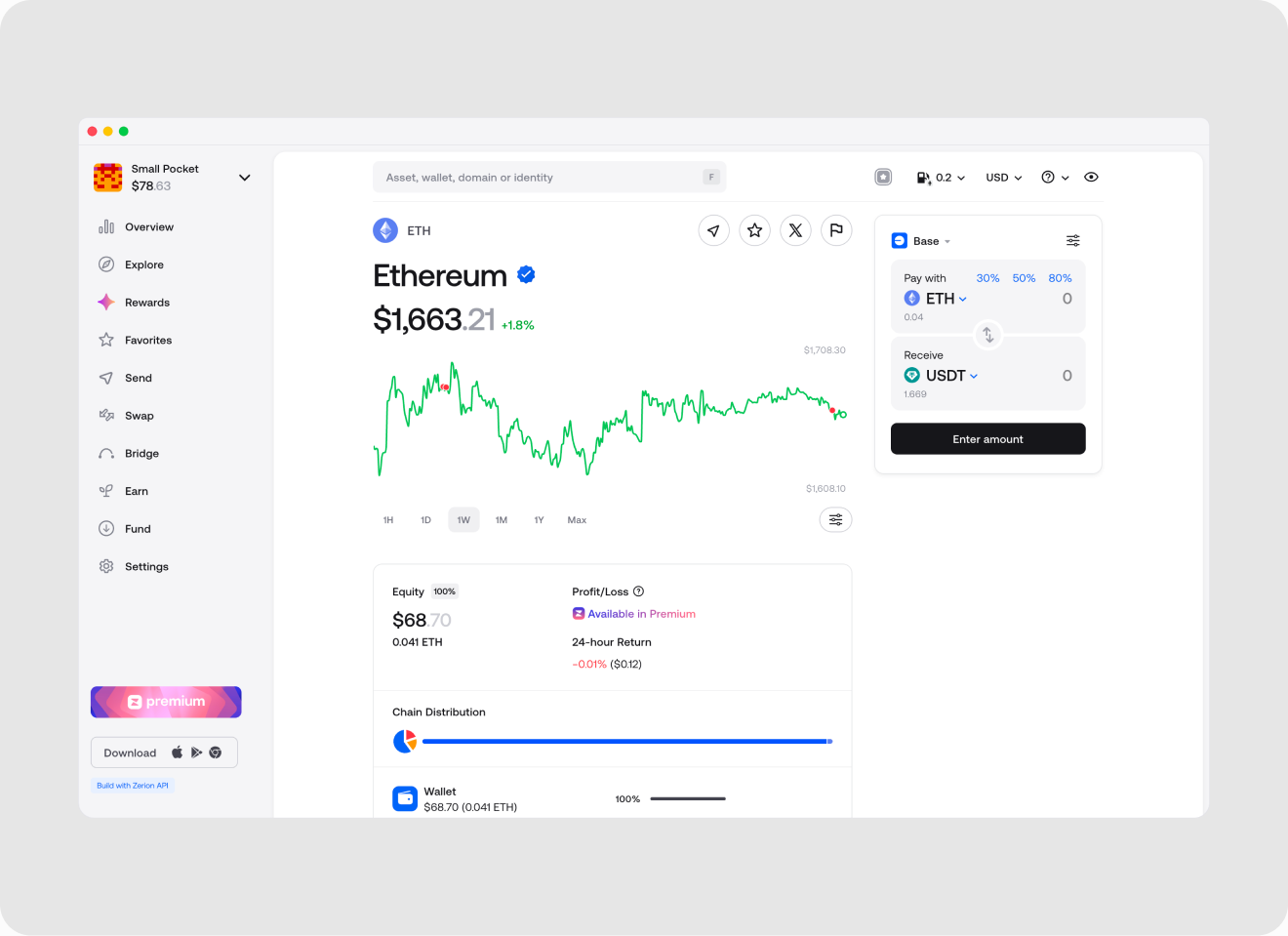
Web was where Zerion started: a portfolio tracking tool for more advanced crypto users.
I designed the early product foundation, and the core structure stayed mostly unchanged for years, continuing to work and scale as the product grew. Users could track portfolios, add wallets, review activity, and make transactions from a more detailed desktop interface.
The goal was to keep the web app simple, functional, and system-driven. A clear design logic helped the team maintain consistency over time and allowed developers to ship many UI tasks without needing a Figma mockup for every case.
Browser extension
A faster way to use Zerion across DeFi
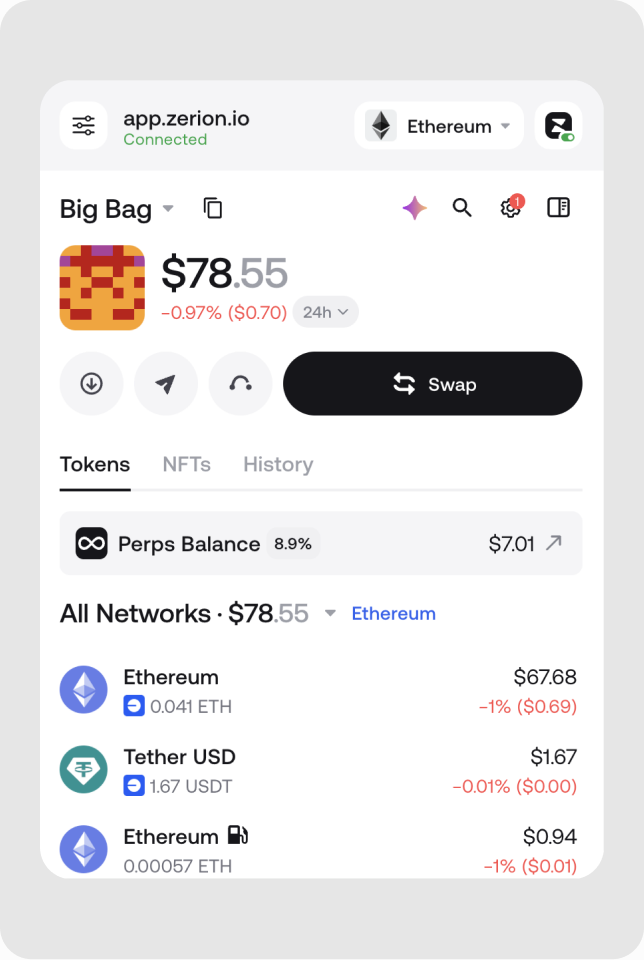
The browser extension was a strategic step for Zerion, built for users who needed faster access to web-based DeFi.
At the time, many dapps were still not optimized for mobile, so the browser remained the main place for advanced on-chain activity. The extension brought Zerion's portfolio experience into that context, letting users connect to dapps, track assets, review activity, and make transactions directly from the browser.
Zerion DNA
Dynamic NFT Avatar (DNA)
zerion.io/dnaZerion DNA was one of the most ambitious projects I created and led at Zerion.
The idea was to turn a user's on-chain activity into a living visual identity. Instead of random rarity, DNA used real wallet behavior: transactions, gas spent, balance, tokens, networks, and NFT age. Your actions shaped both the look and rarity of the NFT.
I led the project from concept to launch, connecting product, visual design, system logic, and production. It became one of the largest NFT collections on Ethereum, with 350K+ holders.


Branding
Endless layers of possibilities
design.zerion.ioI led Zerion's rebrand from the product side, working with the internal team and Shuka studio.
We needed a brand system that could match the depth of the product: approachable for people entering crypto, but powerful enough for advanced on-chain users. The work went beyond visuals. We explored the mission, audience, and brand archetypes to define what Zerion should feel like.
The final direction, "Endless layers of possibilities," became a flexible system for product, marketing, campaigns, and 3D graphics. It helped Zerion stand out in the wallet category while staying clean, functional, and focused on the user.

I designed, built, and launched the Zerion brand site in under 10 hours using Claude Code.
It became a compact home for the visual design system behind Zerion: brand elements, graphics, motion, and product expression in one place. The project also became an experiment in my AI-assisted design workflow: explore in Figma, direct the system, build in code, and ship fast.
Design system
A foundation for consistency, speed, and AI-assisted work
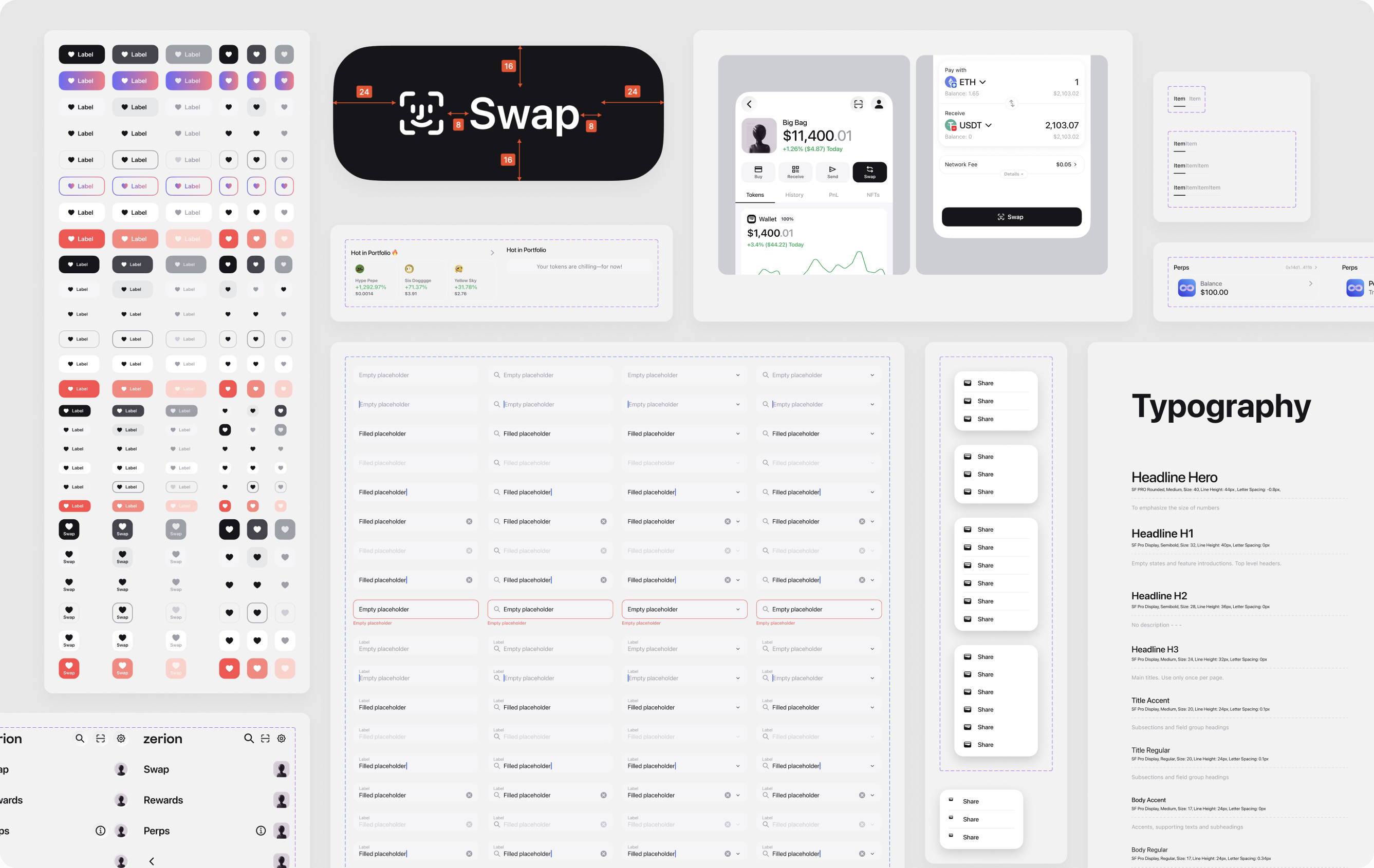
I created the foundation of Zerion's design system, and later we continued evolving it together with the design team.
The system helped us keep the product consistent across mobile, web, and browser extension while moving faster as a team. It was built around simple principles: clarity, consistency, and continuous improvement of the user experience.
More recently, I adapted parts of the system for AI-assisted workflows. This helped reduce routine work and made it easier to generate, review, and ship interface updates faster.